
Review – Take Time

| Designer | Alexi Piovesan, Julien Prothière |
| Artist | Maud Chalmel |
| Publisher | Libellud |
| Category | Cooperative, Limited Communication |
| Length | 15-30 minutes |
| Release Date | 2026 |
| Player Count | 2-4 |
Take Time is a cooperative, limited communication game. Played over 40 scenarios, it challenges players to arrange cards around a clock-face, following a specific set of rules for each scenario. Let’s check it out!
Review
Right out of the box, Take Time has a sort of ethereal look to it. It’s unclear from the art and title exactly what the game is, and that adds to its mystique.
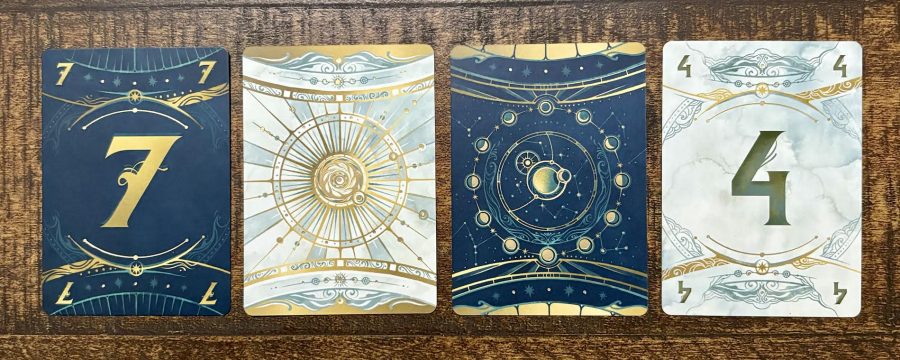
Take Time is divided into 10 chapters, each with 4 challenges. To set up the game, players place the clock-face for their chosen challenge in the middle, and they form a deck of cards by shuffling together the 12 solar and the 12 lunar cards. (Each set of cards is numbered 1-12.) Everyone then receives a starting hand, which they keep face-down temporarily.
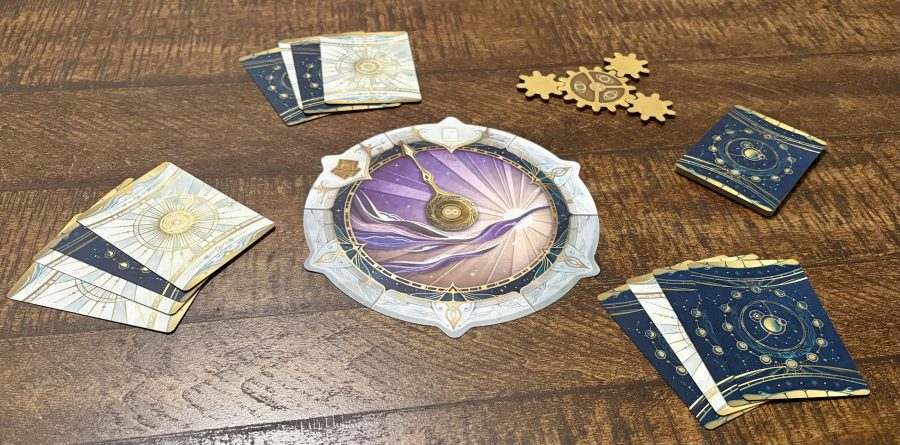
The game is played over 3 phases. First, before players look at their cards, they learn the rules for the scenario and discuss general strategy. For example, they might say, “We should try to play our high cards first,” or “Let’s try to get a total of 14 in this section of the clock.”
When players are done strategizing, they each pick up their cards, thus beginning the placement phase. From this point on, players can no longer communicate.
Anyone can play the first card, and once a card is played, the game continues in turn order. Cards are played next to any of the 6 segments of the clock. By default, they are placed face-down, but in each scenario, players are allowed to play a certain number of cards face-up. This is a critically important way to convey information.
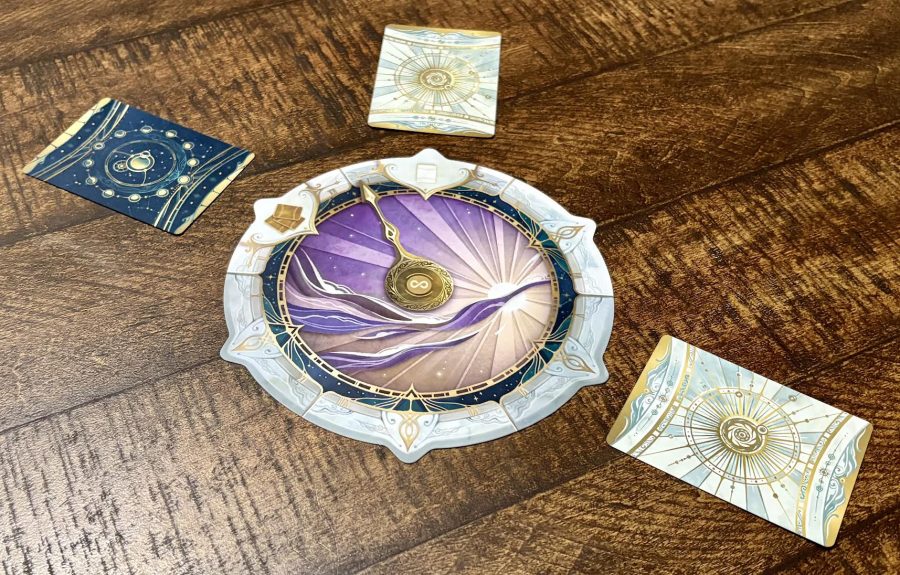
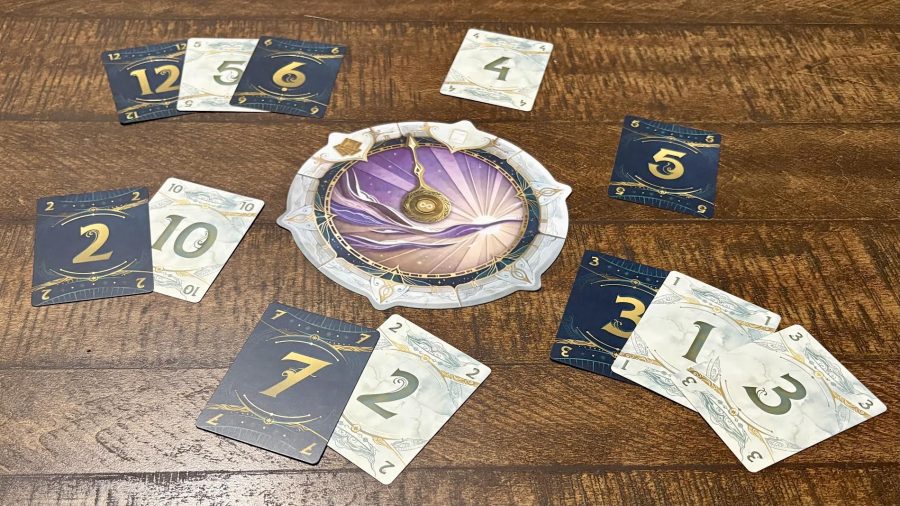
Once all cards in players’ hands have been played, the resolution phase begins. In order to win the scenario, the following must all be true:
- There is at least 1 card in each segment of the clock
- The value of each segment, starting with the first one, is greater than or equal to the value of the previous segment
- No segment has a total higher than 24 (unless the scenario allows it)
- All scenario-specific conditions are met (e.g., “This segment must have exactly 1 white card,” or “This segment must have 3 cards”)
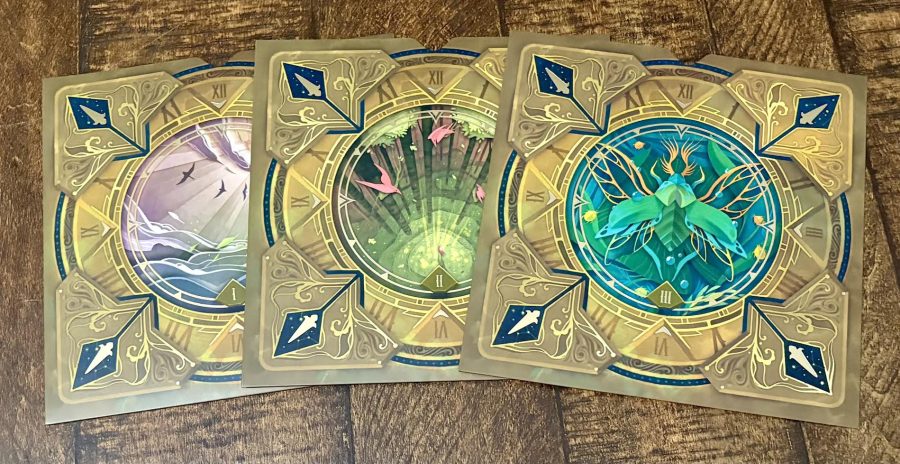
If players win, they return the clock to its chapter sleeve and progress to the next scenario. If they lose, they can either try again, gaining 1 additional face-up card, or they can place it in the “Sleeve of Regrets,” where they skip the scenario and can return to it later.
If players complete all 40 scenarios, they can open the “Rebirth” sleeve, which adds extra replay value.
Take Time is an enjoyable family-weight game, reminiscent of other limited communication co-ops like Hanabi, Bomb Busters, The Shipwreck Arcana, and The Mind. I tend to like this style of game, and Take Time is no exception. The fun here comes from trying to convey — and also interpret — fuzzy, abstract information. Players must try to read into each other’s actions, asking themselves questions like:
- “Why did she play that card first?”
- “What is he trying to tell me by playing on that segment?”
- “Is it worth playing face-up to give my teammates a clue?”
- “This segment already has a lot of cards. If I play there, will the total exceed 24?”
And so on. The early scenarios are fairly easy, but challenges introduced in later chapters keep things interesting. To that end, the Sleeve of Regrets is a nice inclusion; it’s cool that the game gives players a way to skip scenarios and revisit them later.
Production-wise, Take Time is a handsome game, from its compact, foil-detailed box to its art-nouveau aesthetic. The iconography is easy to understand, and the 10 chapter sleeves help to keep things organized. Overall, it looks and feels like a quality product.
Bottom line, Take Time is one of the better 2026 games I’ve played. I wouldn’t be surprised if it got a Spiel des Jahres recommendation. If you enjoy limited communication co-ops, I recommend checking this one out.
A review copy was provided by Asmodee.
The Bottom Line
Take Time is quietly strategic, like a more serious take on The Mind. With beautiful production, quick gameplay, and high replay value, it's already a 2026 standout, and I wouldn't be surprised if it gets a Spiel des Jahres nod. Recommended.
8.0
