
Review – Legends of the Arena
Tabletop version of Nintendo's relative physical altercation game
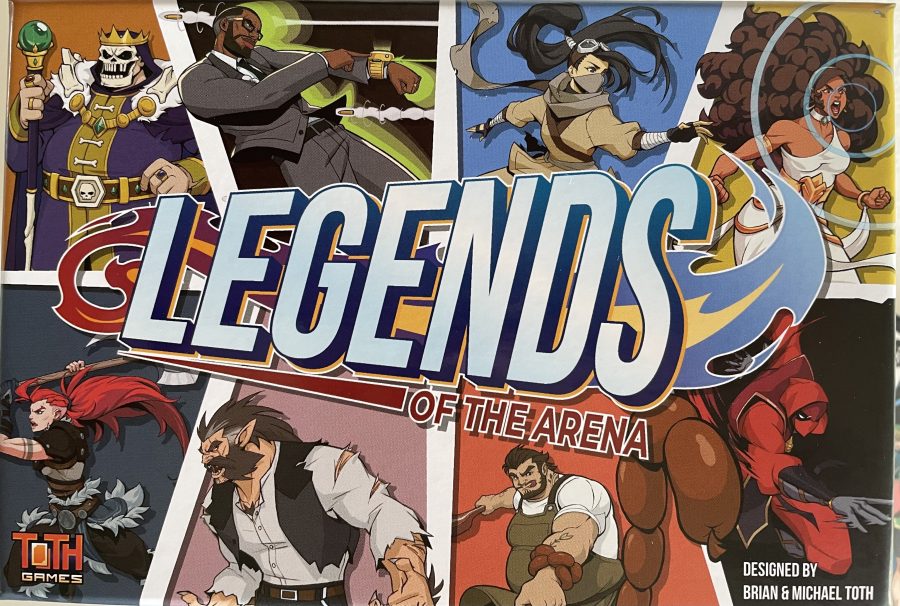
| Designer | Brian & Michael Toth |
| Artist | Christian Erbe and others |
| Publisher | Toth Games |
| Category | Programming/Fighting |
| Length | 20-40 depending on players |
| Release Date | 2026 |
| Player Count | 2-6 (base), 1-6 with CPU expansion |
Legends of the Arena is a 2-6 player programming game that plays like an arcade platformer fighting game (it’s like that one game with the siblings who destroy things). Players can choose from 8 legends in the core box, each with it’s own bio/play card, standee, action cards, reference card, and divider for when you put them away. Each character also has a low, mid, or high complexity rating to make things easier for new players. Gameplay involves choosing 3 cards and simultaneously revealing them with other players to see who lands hits, who blocks, who gets pushed, and ultimately who gets the most knockouts and wins the arena! So is it a fun free-for-all, or is it as boring as a 10-minute round with walls and no items? Read on for the review!
Review
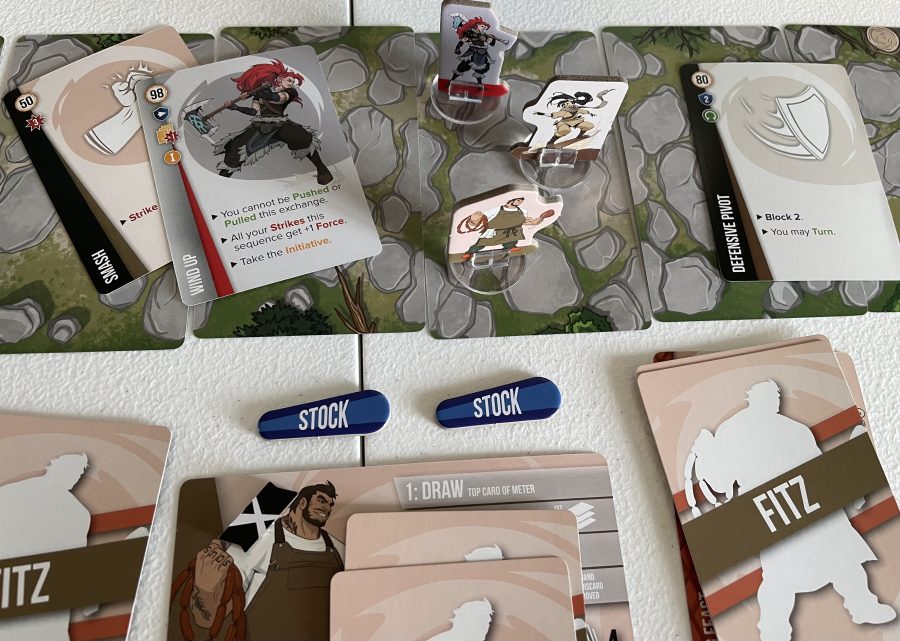
Legends is at its core a programming game, since players will be choosing their 3 cards in advance and unable to change their order once a sequence has started. Each card that everyone flips over is a new exchange, and unless a card says otherwise, anything left over from the last exchange is discarded. Players will try to order their cards so that they can do damage, causing fatigue and generating push tokens on their enemies. These tokens resolve at the end of the exchange, and if a Legend is ever pushed past the edge of an arena, they are knocked out. If you’re only pushed onto an edge, you can turn your character around and move back on to the nearest space (like you grabbed the edge and pulled yourself back up).
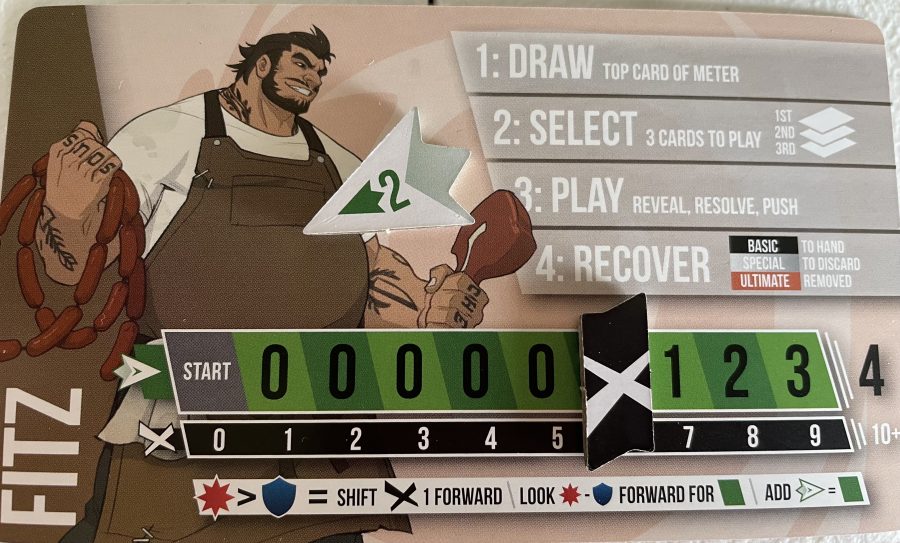
Push tokens and fatigue are a tabletop answer to the fighting sibling’s videogame percentage damage; the more fatigued a Legend is, the more likely they’re going to be pushed in a direction they didn’t intend. The example in the rules shows Legend Alysia taking a 3 Force strike, but she has 1 block. Because she took a hit, Alysia is fatigued, moving her Fatigue token 1 to the right. Since 2 force got through, the person controlling Alysia looks 2 to the right of where her Fatigue token currently is, which shows the number 1. Therefore she gets 1 push token placed on her board, in the direction her attacker is facing. At the end of this exchange, she’ll get pushed 1 in that direction. As her fatigue grows, it will become easier to push her farther, making knockouts more likely.
Players have a lot of choices when playing Legends; of the 8 characters you can choose a Viking warrior, a Chef, an extreme sports champion, an Opera singer who dresses like Wonder Woman’s mom, a Necromancer, a monster hunter-turned werewolf, a ninja who definitely likes to invite his friends to come to his house (“Get over here”), and a dude who is certainly not a TVA agent. Nope. You also get 2 different arenas plus variants that can add more spice into your game.
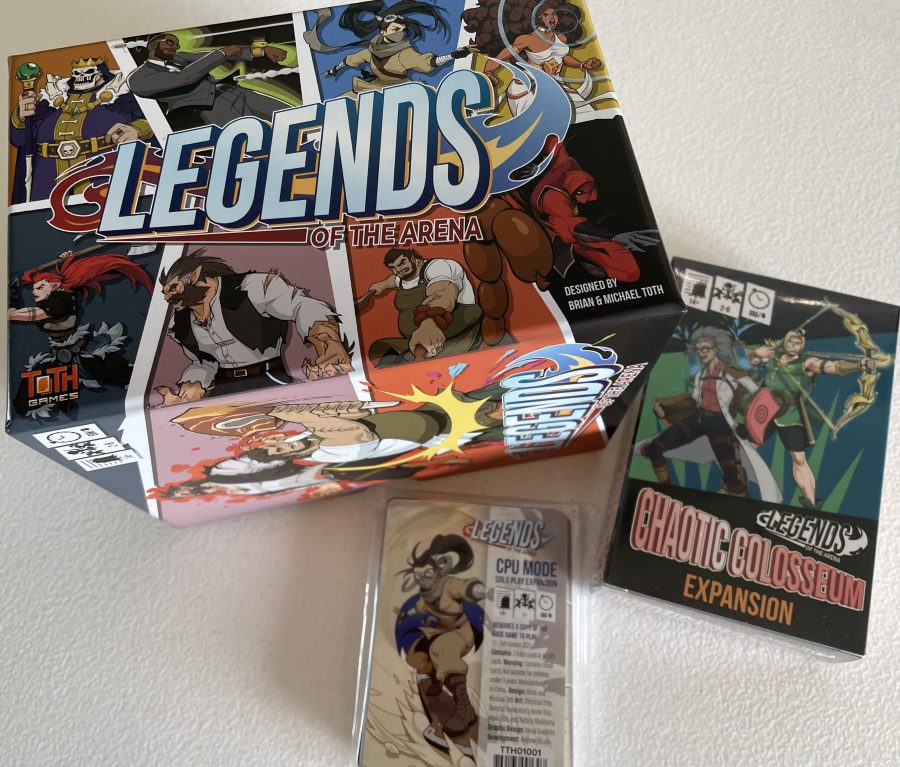
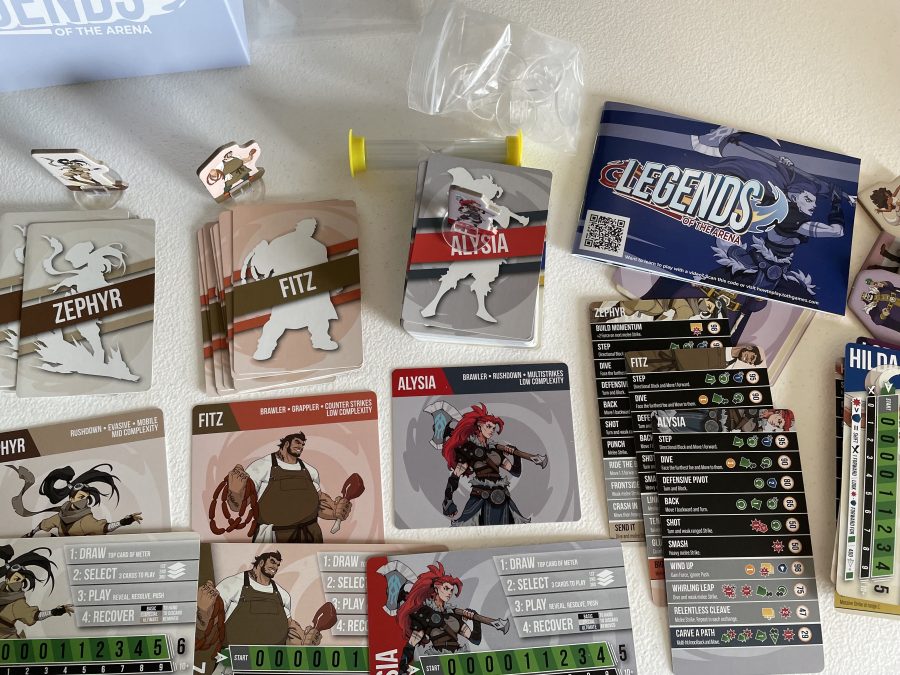
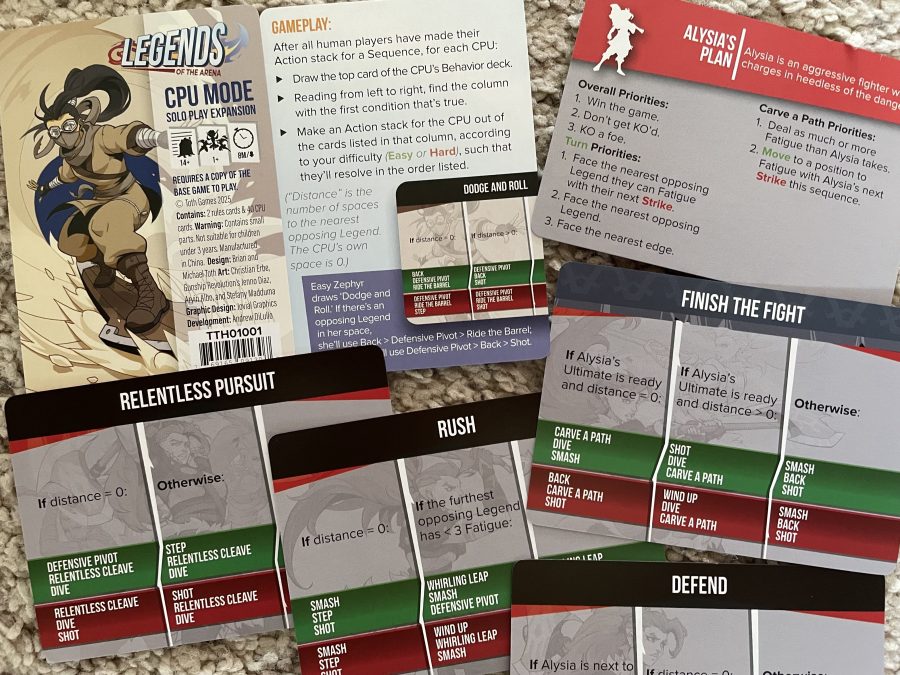
CPU Mode gives you the tools to make a “computer” player join the fray, giving you cards and “if=then” examples for each character in the base game, making it easy to even out the teams, or play by yourself if everyone is “just 5 minutes away” and running behind for game night. It’s not by any means a must-have, but it’s a fun addition to the Core game.
Expansions
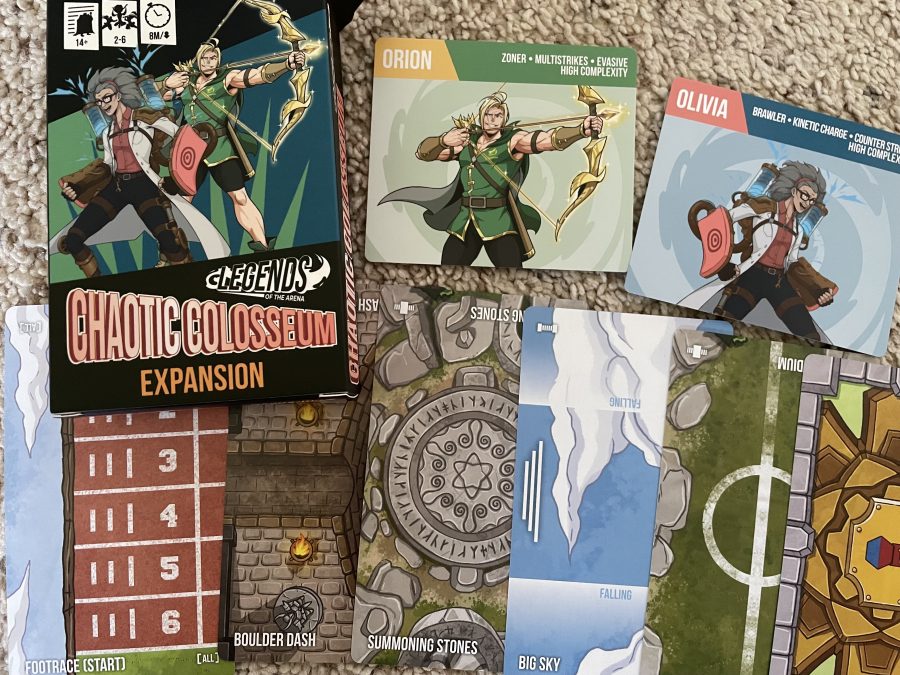
Chaotic Colosseum adds 2 new Legends – Olivia the mad inventor and Orion the archer; both are high complexity and both have fun new abilities to shake up your games. Oliva can actually store some push tokens placed on her, letting her decide how much to be pushed (to some extent). Orion is a magical Legolas/Hawkeye type, able to deal damage at a distance and cause problems for anyone caught in his crosshairs (or landing on his arrow tokens). It also adds 10 new arenas with new challenges and win conditions, like Boulder Dash that sees you dodging a big rock Indiana Jones style, or Footrace where you can get the Win if one of your team’s Legends are on the Finish at the end of a sequence without any enemies there. There’s also Striker Stadium, The Floor is Lava, Big Sky, Thunder Spire, Item Crate, Summoning Stones, Sanctuary, and Bumper Zone.
Conclusion
I am admittedly not the biggest fan of programming games – it stinks to set up a bunch of metaphorical dominoes only to see them not tip in the right direction, or worse yet, all tip over except the last one that would get you points or the victory. BUT! Legends of the Arena lets you plan things out in your favor, using faster speed cards or the initiative to your advantage so that you don’t do a big swing and just end up pushed off a ledge. Which can still happen, but since games only take 20-40 minutes, you can easily reset and go again. And that’s key, because who plays only one game of Stomp Sisters Battle anyway? Legends is a fun, quick game that does a great job simulating a platforming fighter game. And if you’re only going to get one expansion, definitely get the Chaotic Colosseum, but CPU Mode is a good buy for soloists or if you need to round out a team.
Review copies were provided by the publisher.
The Bottom Line
Legends is a fun, quick game that does a great job simulating a platforming fighter game.
8
