
Review – Container & Expansion
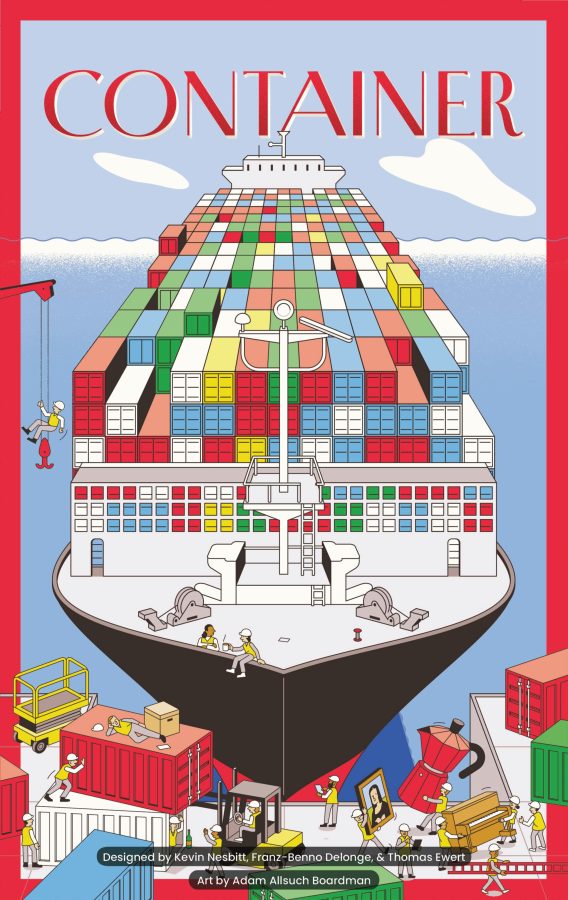
| Designer | Franz-Benno Delonge, Thomas Ewert, Kevin Nesbitt |
| Artist | Adam Allsuch Boardman |
| Publisher | Allplay |
| Category | Economic Strategy |
| Length | 45-90 minutes |
| Release Date | 2026 (original version from 2007) |
| Player Count | 3-5 |
After many years out of print, the legendary strategy game Container has returned in a new version from Allplay. Do you have what it takes to manage a container shipping company? How well can you determine the value of goods? How effectively can you deliver them to their destination? Let’s see how this game holds up two decades on!
Review
I always felt a sort of mystique around Container. It was a game I would hear whispered about in hush tones, tales of its amazing strategy, fascinating economy, and more. Having never played it before, I finally had the chance thanks to the new Allplay edition.
Now, there is a lot going on in this game, far more than I can cover in a brief synopsis. That said, I’ll try to describe the main flow of the game, to give a general sense of how it works.
In Container, players control shipping companies. They each begin with a factory, a warehouse, and a container ship. Throughout the game, players produce goods using their factories, and other players can then buy these goods, storing them in their own warehouses. Once the goods are in warehouses, players can sail to each other’s docks, purchase the goods as cargo, and load the cargo onto their ships. Lastly, players sail to Container Island, where their shipments can be sold for money/points.
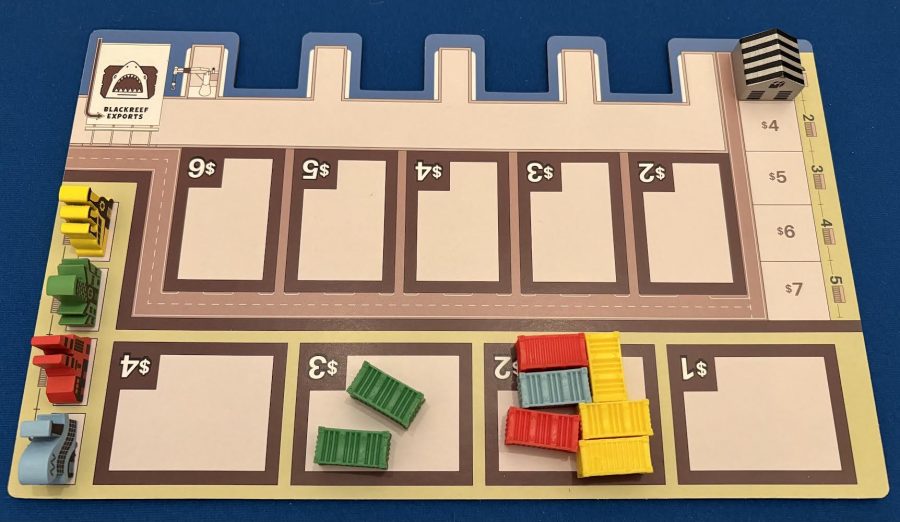
This process involves a number of steps, but in essence, Container is about producing and selling goods, the life cycle of which boils down to factory → warehouse → ship → island.
Throughout the game, players can increase their factory and/or warehouse capacity, allowing them to produce/store more containers. When selling goods, either from factories or warehouses, the selling player sets the prices. In practice — and this is one of the most interesting aspects of the game — this means players control the game’s economy. As they try to buy low and sell high, players collectively determine how much each type of cargo is worth. Price things too high and no one will buy them. Price them too low and the profit will be minimal.
Additionally, things can fluctuate over time, so players will constantly have to adapt to changing market conditions. How much are opponents selling goods for? How much money does everyone have? Which types of cargo do others seem interested in? Is it worth producing goods if everyone’s ships are full? Questions like these drive the strategy of the game.
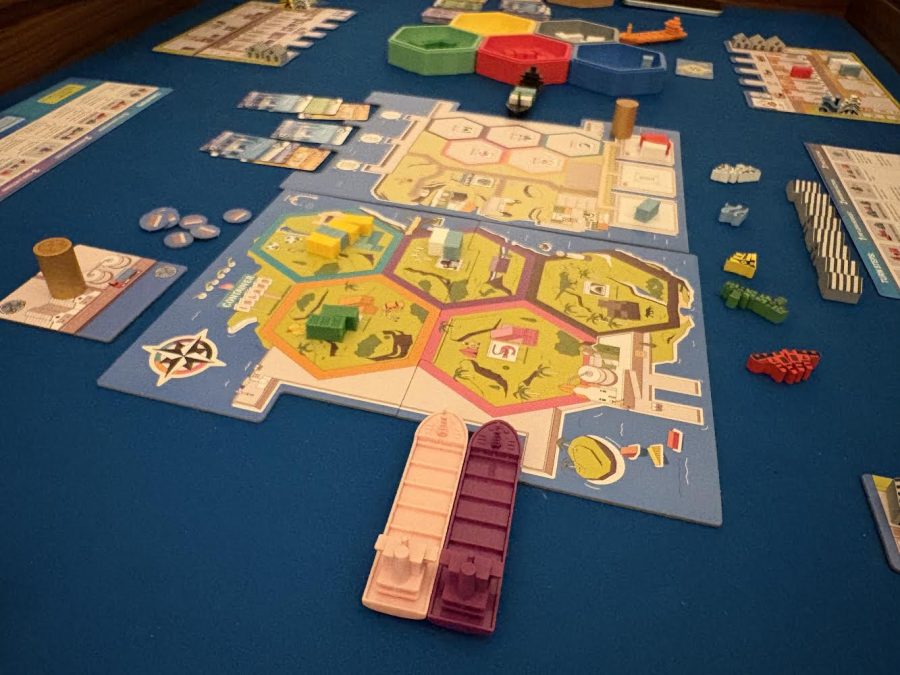
And while this might sound very cutthroat, Container isn’t about trying to hose opponents. Sure, this game can be mean at times, and players are indeed competing with each other, but the competition is built around cooperation. It’s in players’ best interest to work with each other. After all, when someone buys goods, both the buyer and the seller benefit.
To that end, rather than trying to excel in every aspect of the logistics life cycle, players will often want to specialize in one. For example, in a recent game, I went the factory route, focusing heavily on producing goods. Because I could pump them out efficiently, I could sell them cheaply, and this proved a viable strategy. Someone else, in turn, focused on warehouses, and our play-styles complemented each other nicely.
Overall, Container is a unique specimen, a game full of paradoxes. It is rigidly structured, but economically freeform. It’s competitive — sometimes fiercely so — but it has players working together. It bears the dullest of dull themes, but it’s full of engaging, dynamic strategy. I haven’t played anything quite like it.
Thinking back on the whispers I used to hear about this game, I understand why it earned cult-classic status. Container is certainly not a game for everyone, or even for most people, but there is a certain gamer niche for whom it will really shine.
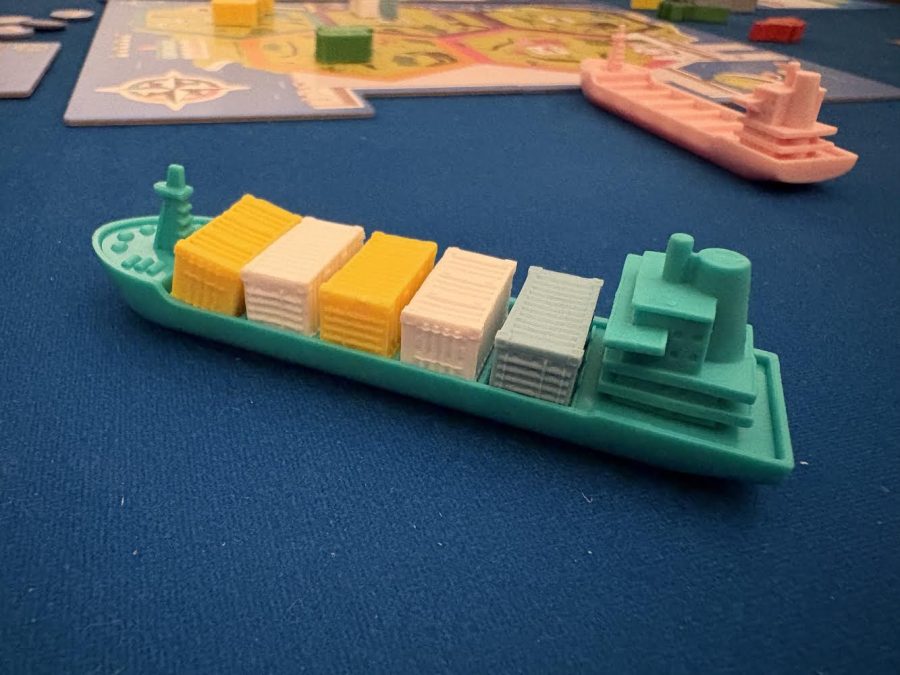
Allplay’s new version looks amazing, with top-shelf production in a compact box. The plastic ships and containers are excellent quality, and the board and player tableaus are vibrantly colored and easy to read. Astoundingly, Container’s MSRP is only $39; with production like this, I would have expected it to be much higher. Overall, it’s a great product at a great price point.
For folks wanting extra crunch, the More Containers expansion provides additional gameplay modules, including:
- Truck Companies: An extra mechanism that allows players to earn money during a factory purchase
- Player Loans: When taking loans, a player may be obligated to take the loan from an opponent, rather than the bank, with interest being paid to that opponent
- Luxury Containers: Introduces a new, gold container that can be used as a wild color
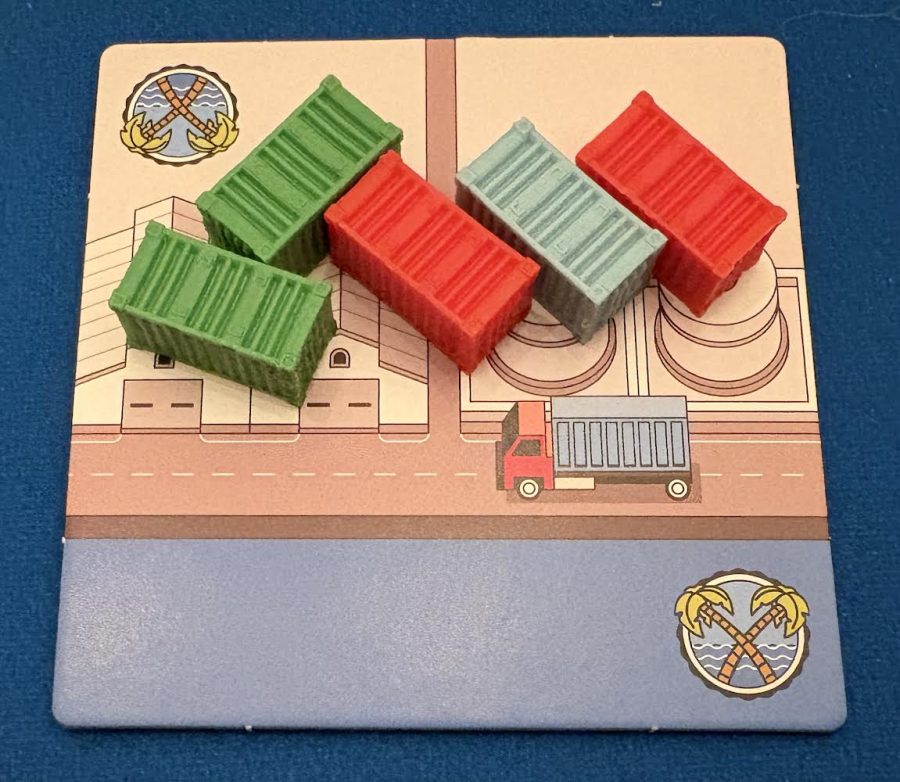
Of these modules, the luxury containers are my favorite, and the player loans add another layer of competition to the game. To me, the truck companies feel like they add complexity without enhancing the game very much, but others may feel differently. Bottom line, this expansion isn’t strictly necessary, but it will fit the bill for folks looking for even deeper strategy.
It is cool to finally play Container all these years later. This game has some very interesting ideas, the likes of which I haven’t seen anywhere else. It can feel quite heady to learn, but the payoff is a truly unique tabletop experience. If that sounds interesting to you, give this game a try.
A review copy was provided by Asmodee.
The Bottom Line
Container is well deserving of its cult classic status. It is a fascinating economic game full of paradoxes and deep strategy. It's certainly not for everyone, but I highly recommend it for strategy gamers looking for something unlike anything else in their collection.
8
