
Overview
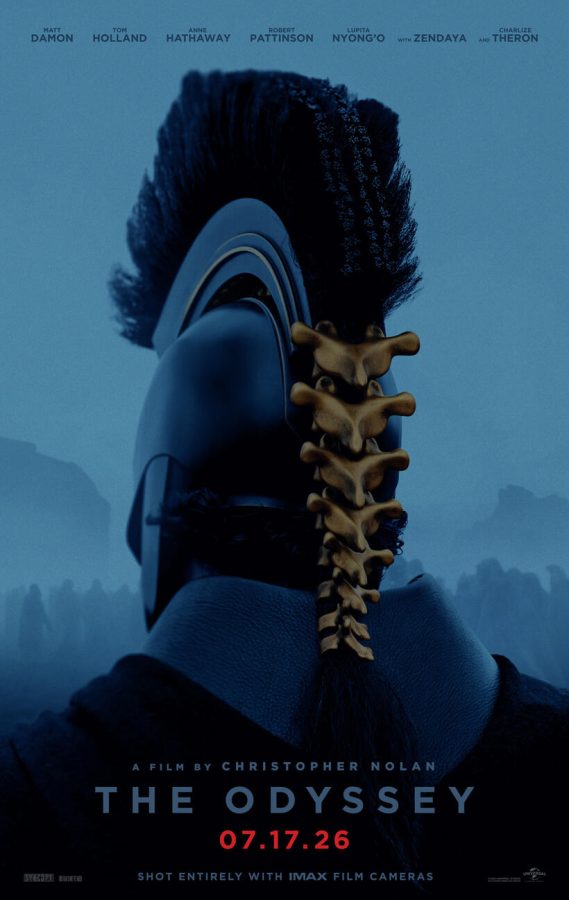
| Synopsis | After orchestrating the fall of Troy, king and warrior Odysseus (Matt Damon) finds himself and his soldiers cursed on the way home from war. |
| Length | 2 hours, 52 minutes |
| Release Date | July 17, 2026 |
| Rating | R |
| Distribution | Universal Pictures |
| Directing | Christopher Nolan |
| Writing | Christopher Nolan, based off Homer's works. |
| Composition | Ludwig Göransson |
| Starring | Matt Damon, Tom Holland, Anne Hathaway, Robert Pattinson, Himesh Patel |
Troy may not be Turkey’s most impressive archaeological site, but it is one of the more famous ones, thanks to the legend purported in Homer’s The Odyssey. Just outside the ancient ruins of the city, a replica wooden monument of the Trojan Horse stands, allowing tourists to climb up and take photos from its lookout (meanwhile, Çanakkale hosts the version from 2004’s Troy, although it is mostly roped off to visitors). My tour guide—an archaeologist himself—smiled at the sight, amused whenever he heard others discuss how the deceptive offering must have been wheeled through the very streets we were currently traversing. Except, he explained, that it most likely never happened. The strata levels in the excavated sediment that indicate the city was razed (of which there are several) don’t neatly line up with the chronology of Homer’s classical tale. Although the topic is still under debate, given Homer’s writings occurred hundreds of years after the fall of Troy, with his account including many fanciful elements, many archaeologists believe the story of the Trojan Horse is more myth than fact.
Yet it’s a tale that still pervades the modern mind. Why did Homer write it in the first place? My tour guide hypothesised that it was a way to reconcile the fact that a city as great as Troy could fall—that something truly extraordinary must have happened. The fall of Troy was a moment in time so shocking that it captured the imaginations of people for generations to come.
Therefore, as a piece of literature, Homer’s The Odyssey finds itself in a special category. It’s not factual and yet it’s still oddly historical. One of the most famous writings from antiquity, its cultural contribution is immeasurable, shaping legends, national identity, and inspiring Western narratives for millennia.
So, when a Hollywood director decides to adapt such a classic and weighty tale, it’s a production that will not only attract a lot of attention, but also criticism…

Content Guide
Violence/Scary Images: Lots of combat sequences but little blood and restrained gore. People are stabbed, throats slit, and beheaded, though the camera frequently opts to cut away. Mythological creatures are seen eating humans, biting off their heads, shifting into the horror genre, although not gory. There’s an incredibly disturbing scene where humans are transformed into pigs in a grotesque fashion. Corpses rise up from the dirt to speak to the living. Livestock are bled out as part of a sacrificial ritual. Human sacrificed is mentioned but not fully seen on camera. A man is murdered in his bed in a flashback—once again, the camera cuts away for most of it. Men are seen drowning and being crushed. Intense and brutal fights scenes occur in claustrophobic settings. Instances of animal cruelty.
Language/Crude Humor: The f-bomb is dropped, along with the s-word, and “b-stard”.
Drug/Alcohol References: There are numerous scenes of people feasting and drinking alcohol, with some drunken behaviours on display. A lotus flower is repeatedly eaten which causes amnesia-like symptoms, and it’s questionable whether it’s taken with consent.
Sexual Content: A few couples are seen kissing, sometimes in a bedroom setting. Sirens, the alluring mythical creatures, are portrayed as women in sheen clothing, but nothing is actually revealed. The bare backsides of some men are seen. Hints of domestic and sexual violence in the past of some female characters. One character is essentially drugged into a prolonged romantic relationship.
Spiritual Content: Set during the time of the ancient Greeks, just after the fall of Troy, the film portrays a culture that is deeply entwined with the time’s pagan beliefs. “Zeus’ Law” is a common belief system that becomes integral to the themes of the movie, something which dictates the hospitality of guests. A character is guided by Athena. Characters fear they have been cursed by Poseidon and Zeus. Creatures from classical Greek mythology are present throughout the story, including witches and temptresses. Whether the Greek gods exist is left up to interpretation.
Other Negative Content: Scenes of animal cruelty. Plots of murder. Deception. Inhospitality. Stories of plundering and savagery.
Positive Content: The film promotes the idea that human life is to be honoured, with the weight of the fallen being something which should humble the living. The story argues the importance and necessity of common laws and morals, as it’s sacred to a civilised society, and should not be so readily abused.
Review
There was excitement in the air when Christopher Nolan first announced his intention to adapt Homer’s famous epic. With several blockbuster hits under his belt (many of which are still camping out on IMDB’s Top 250 list), this director that didn’t shy away from the technical challenges of cinema seemed to be a good fit to take on the grandeur of The Odyssey.
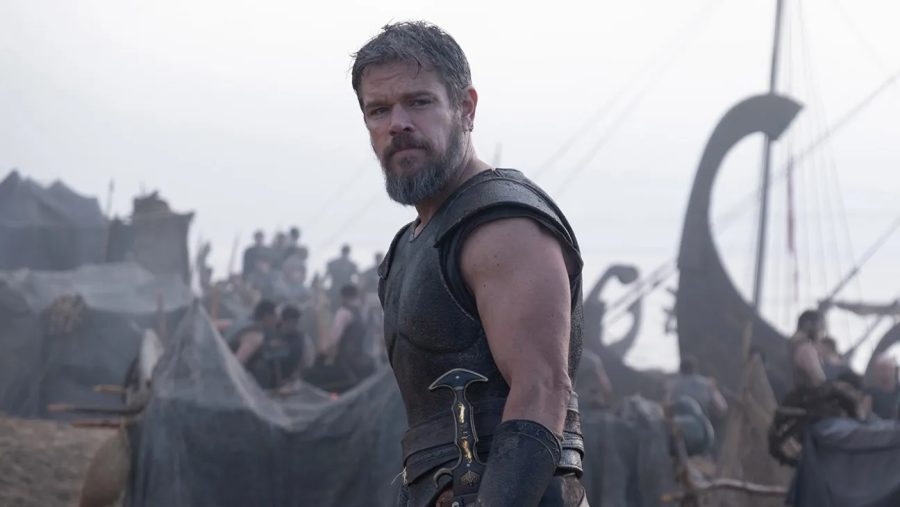
And then the rumours started. The leaks. Casting decisions that seemed less about remaining faithful to the text and more about ensuring the production is eligible under the Academy’s new criteria for Best Picture nomination. Costumes that wouldn’t have existed within the historical time period. Ships that were more Viking than Greek. Not to mention the appearance of hypocrisy when it came to Hollywood’s blundering treatment of ancient Greek culture in comparison to how it handled narratives from other places.
If all the missteps of the film could be summarised into one piece of criticism, then it would be the marketing. To be honest, there have been so many rumours over the past few months that—like the Homeric piece itself—it’s hard to distinguish what was once fact. Given Nolan’s filmography, many have emphasised the director’s penchant for intense research, having an eye for all those smaller details, and being a stickler for historical accuracy. This has created the expectation that Nolan will produce a faithful adaptation that’s as historically accurate as possible for an ancient fictional narrative. Once again, not sure if this was the image the studio pushed, or if the Internet merely ran with it. But if the film was instead advertised more as merely Nolan’s version of The Odyssey, or that he intended to retell the tale in a way that interested him, then the audience’s expectations might be more readily met. As it currently stands, a lot of viewers are walking into this film wanting something different than what is on offer.
While Nolan has taken less creative liberties, the controversy surrounding The Odyssey is reminiscent of Darren Aronofksy’s Noah, where the director has taken a treasured piece and expounded upon their own questions raised by the themes and characters, as opposed to committing to a more standard retelling of a traditional interpretation. In The Odyssey, Nolan seems less interested in exploring the nature of hubris, and more intrigued with the concept of whether a warrior ever really returns home from the horrors of war. After all, Nolan adapted Emily Wilson’s more modern translation of the epic, as he narrows in more on the disintegration of the moral fabric of society, instead of focussing on Odysseus’ folly. Or maybe it’s just a case that this is simply more of the tale that Nolan wished to tell? Either way, a lot of the noise surrounding this production is rooted in the frustration of Nolan’s portrayal of the story, as it didn’t line up with people’s imagined expectations… but that doesn’t necessarily mean that the story that was told was horrible. Letting go of the need for The Odyssey to be a close beat-for-beat adaptation, the film is ponderous, engaging, and most of all, epic.
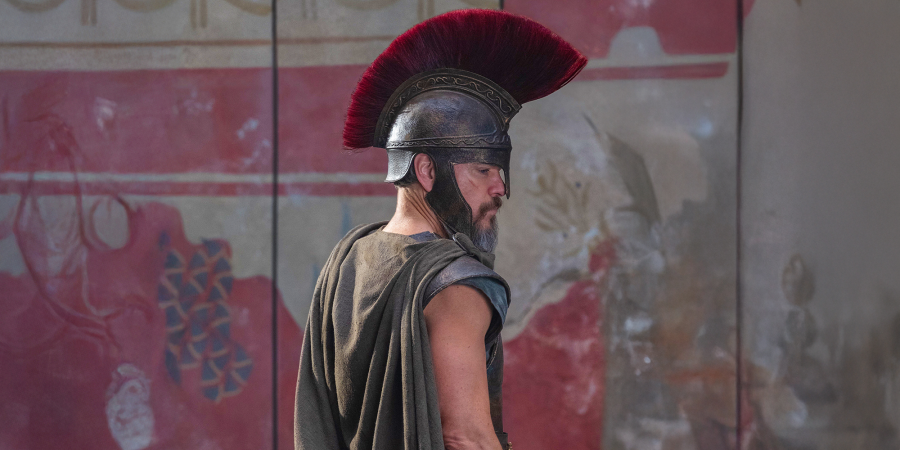
For those unaware, The Odyssey tells of the story of Odysseus—the king of Ithaca who was also a husband and father, that needed to leave his home in order to fight in the Trojan War. After ten years of conflict in Troy, it’s Odysseus that conceives of the Trojan Horse, finally securing victory. Odysseus is then finally free to sail home with his men, though due to some fool-hardy decisions that he makes, that journey, uh, well… becomes a bit of an odyssey! While Odysseus struggles against the wills and curses of the gods, his wife and son back in Ithaca struggle to maintain political status quo.
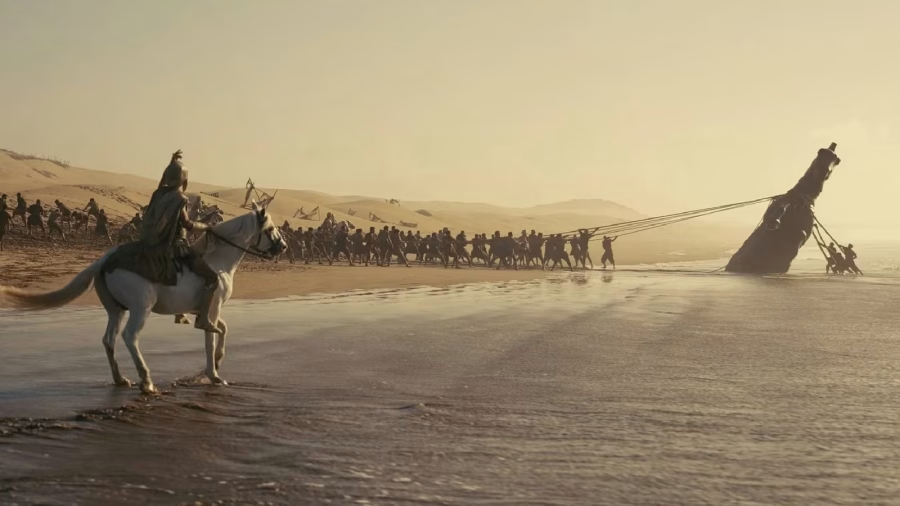
As you can imagine, such a grand-sweeping narrative that details the multiple setbacks Odysseus endures while trying to get home, will naturally require an adequate runtime. At almost three hours, this isn’t called an epic for no reason. While some might groan at the film’s bladder-twinging length, any shorter would not have given the story justice, whereas making it longer or dividing the movie in two would’ve felt unnecessary. The pacing feels even and consistent, ebbing and flowing between action sequences, tense scenarios bordering on horror, and monologues that lull with a hypnotic intensity. Like his latest films, Nolan doesn’t tell the story in chronological order, but neither is it mind-bendingly complex—The Odyssey is possibly his most accessible movie in years. It takes a while for the story to slowly unwind, but it eventually wraps back around and delivers all the narrative’s carefully-crafted themes and morals in a masterfully handled third act.
It certainly has a style about it, though unlike 300, The Odyssey features both style and substance. It can be difficult to adapt these Greek tales for a modern audience given the loss of religion’s impact in a general sense within Western society. But Nolan manages to approach the issue with a sense of maturity and respect, not shying away from its importance and inclusion, but also allowing to leave some things up to interpretation for viewers that don’t wish to play along.
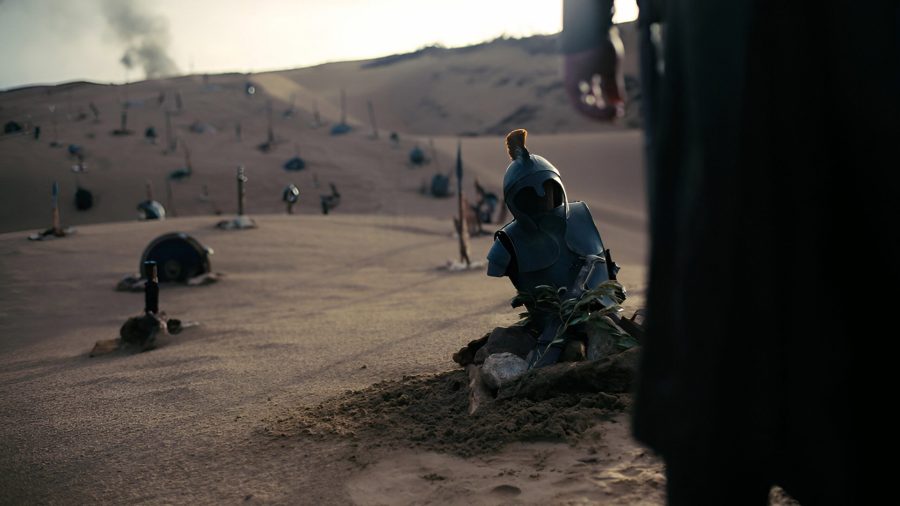
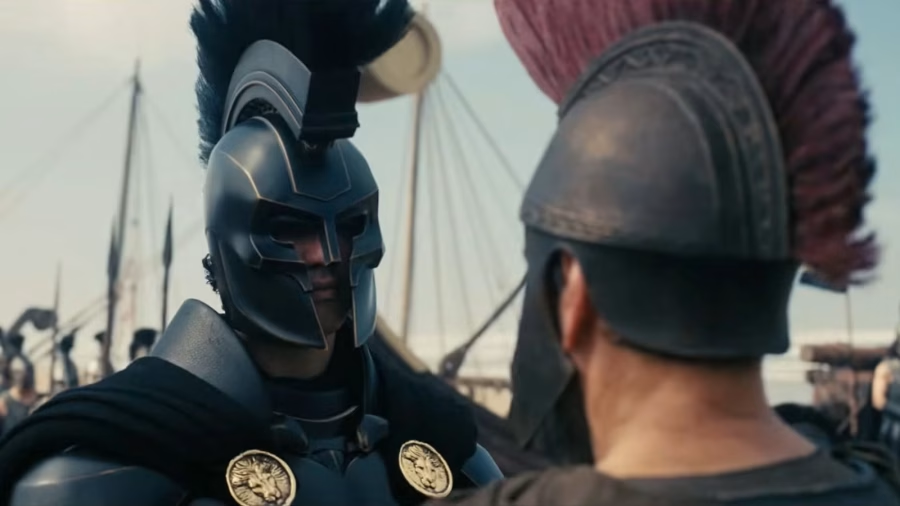
The presentation leans heavily into the mythological aspect of the narrative, setting these universal human themes in amongst a timeless age. It’s as though the costume and production design merely provide the essence of the time of the ancient Greeks, with Agamemnon looming like a harbinger of destruction, and the Trojan soldiers looking sleek and professional in their white uniforms that seem to share more in common with House of the Dragon’s City Watch than anything remotely historical. The most accurate aspect of the film might be the score, where composer Ludwig Göransson ensured only time period-accurate instruments were used (some of which needed to be reinvented as a result). The music is haunting and other-worldly, and combined with the other filmic elements, it allows the story to slip seamlessly into its fantasy sequences without jarring the audience. As wild as this story becomes, the world Nolan has orchestrated feels established and whole.
To flesh out his world a little more, Nolan has pulled narrative elements from other texts in antiquity and mixed them into Homer’s work. Yet he refrains from stepping too much on the toes of The Iliad; the piece that details more of the conflict surrounding the Trojan War. Sticking to what is specifically shared about the war in The Odyssey, the focus remains on Odysseus and his role with the calamitous Trojan Horse. This means that the backstory to what initiated the war is not directly spelled out to the audience. If anything, it’s assumed knowledge. This is where the most controversial casting decision leading up to the film’s release (Lupita Nyong’o as Helen of Troy) can be seen as an inspired choice.
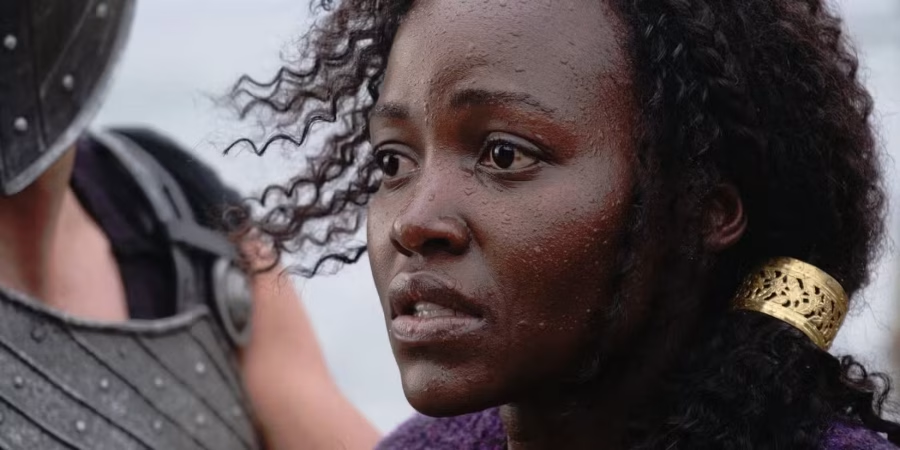
It’s no secret that The Odyssey has employed ‘diverse’ casting (with ‘diverse’ being in quotes because what counts as diversity is very much up to interpretation these days). Like other components in film, casting when done well should be an invisible art form—the choice of actor for a role should be so seamless that audiences aren’t pulled out from the action enough to question the validity of the decision. In general (and somewhat controversial to express), ‘passing’ and conforming to stereotypes typically plays a larger part in the process than what people in the industry care to admit. Yet every so often a bold, unorthodox choice can be defended by an actor’s marvellous performance or a cunning director’s vision. The ironic part is that The Odyssey’s cast may have been viewed as merely inspired or experimental a decade or two ago, but since numerous films and television shows have lately pushed the boundaries of the casting process, audiences are beginning to question whether these choices stem from the art or more from corporate boardrooms as they try to appeal to identity politics.
Does every actor in The Odyssey deliver a solid performance? Absolutely, yes! Does featuring a smattering of different races across the cast cynically improve the film’s chances of being nominated for Best Picture? Also, yes. Both can be true and they don’t have to be mutually exclusive goals. After all, representation in cinema is important. There’s just debate surrounding how best to achieve said representation. Colourblind casting is one such approach, though throughout the last few years proponents of CRT have argued that no such thing exists—while a person’s race may not play a significant role with a character, an actor’s genetic makeup will always either intentionally or unintentionally form part of their identity, and therefore by extension the character’s backstory. Essentially, changing the race of a character will also potentially create a different nuance for the story. This is what has occurred in The Odyssey, with Lupita Nyong’o’s portrayal of Helen (and her twin sister) being the prime example. With viewers given little to no context surrounding the origins of the Trojan War, it provides Nolan with the opportunity to reimagine certain characters and their backstory in order to support his thematic goals. Nyong’o is striking and unique in her role, hinting at a past where her characters may have been taken against their will, representing the violation of Zeus’ Law, as they became isolated and victims of fetishisation. Nyong’o’s casting is not traditional, but it does enhance the story that is being told on screen.
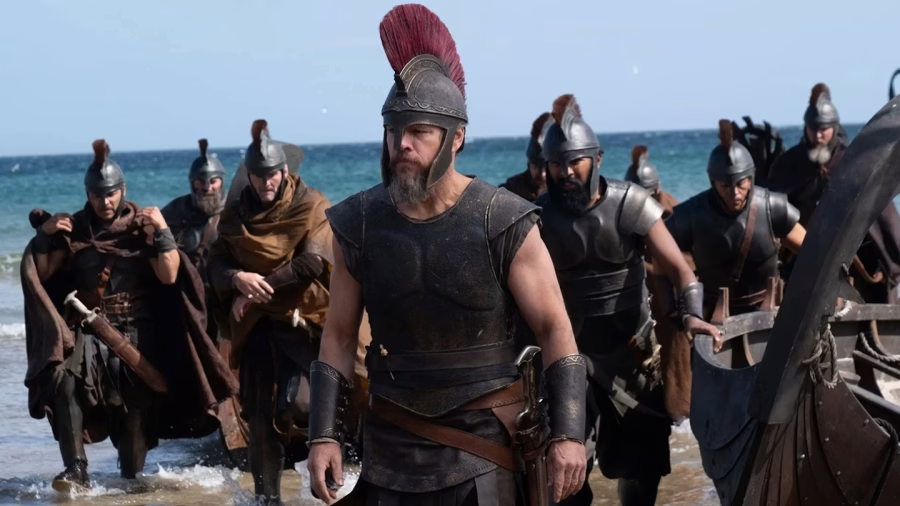
Can the other casting decisions be justified? Possibly. By having a variety of racially different men pursue Penelope’s hand in marriage, it allows the assumption that people have travelled far and wide to exploit Odysseus’ extended absence. Likewise, Odysseus’ crew feels like a ragtag bunch gathered from the far-flung corners of the earth. Essentially it conveys the message that The Odyssey is a human story providing a warning to humanity.
But there are times when the casting decisions are completely jarring. When Himesh Patel (playing Odysseus’ right hand man, Eurylochus) yells at a terrified non-combatant, “We are Greeks!” insisting the soldiers mean them no harm, well… are they!? Are the Greeks here in the room with us right now? Like Patel, Elliot Page delivers a great performance as the deceptive underdog soldier Sinon, but every time the story flashes back to the younger version of the character, played by Mason Cufari, their difference in look is too great to reconcile. Could a scrawny/lanky-looking young adult Greek man have played the role just as well? Possibly. (Though as a side note, since Nolan filmed in Greece, and made use of their government’s cash rebates, it is a slap in the face to not feature more Greek actors in this production—after all, that was one of the original points behind the fight for representation in film in the first place). However, Page isn’t the only one whose age comes into question. While the length of the narrative must always be taken into consideration (taking place over twenty years; ten in Troy, and ten getting waylaid), it is still weird to see Anne Hathaway’s Penelope involved in conversations about having another child, and Tom Holland considered as not having ‘come of age’ as of yet (the actor’s thirty).
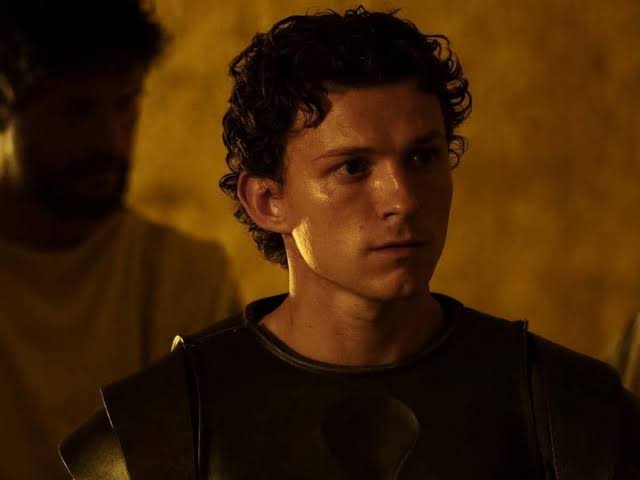
In fact, for reasons I have not yet been able to pinpoint, the entire cast feels jarring for the film’s opening act. It seems more like a slideshow of famous faces instead of an introduction to all the various characters. It simply takes a while to see the role and not the actor behind it. Yet The Odyssey is not the first film to feature a star-studded cast. Why does it take longer to suspend disbelief compared to other films? Is it due to poor casting? Poor directing? Is it the result of being thrown into a different time, place, and within a mythical reality? Does it simply take a while for the outside noise surrounding this production to disappear to the back of the mind, allowing the space for enjoyment? Is there a lack of connection? Nolan isn’t exactly renowned for his emotional dramas; he has stretched himself this time around with the genre. Does he pick Hollywood A-list actors because his strength as a director is more with the technical side of things, and not with the performances, and essentially relies on the actor’s skill to compensate? Yet for whatever reason, no matter how skilled the actor, The Odyssey, much like his other works, always feels slightly emotionally distant. Ironically, it’s the lesser-known actors such as Samantha Morton and Himesh Patel that provide the story with the grace of humanity.
By the time the cyclops comes into play, Matt Damon starts to become indistinguishable from Odysseus, and the film finds its footing, weaving its grand tale of a life built upon persistence and regret. Clunky to start, The Odyssey finishes strong. Unfortunately, for some viewers, they may have mentally checked out—the reviews and reactions of this film are wildly all over the place. As a result, it’s a difficult film to rate. For some, the deviations from the original text, the historical inaccuracies, and the controversial casting choices (where Nolan has essentially committed the same faux pas as 2016’s Gods of Egypt) will overwhelm their enjoyment. But if you’re able to sink in and allow Nolan the freedom to tell the story that he wishes to spin, those criticisms feel minor and slip away with the breeze of the ocean endeavour, as a man wearied and haunted by war slowly starts to be humbled by an ever-changing world he had a hand in destroying. It’s a deep and rewarding narrative that captures the reasons as to why Homer may have crafted his writings in the first place; to try and reconcile brutal events in what was supposed to be civilised society.
Positives
+ Cinematography
+ Practical effects
+ Performances
+ Style, mood, ambience
+ Authentic score
+ Message, themes
Negatives
- Marketing
- Divisive casting choices
- Creative liberties with the original text and historical setting
- Clunky start
- Controversies surrounding production detract from enjoyment
The Bottom Line
If viewers are able to shelve their own ideas of what an adaptation of Homer’s work should be, and allow Nolan to tell the aspects of the tale that interest him, then the reward is an epic story of horror and longing which sinks deep into the psyche and reflects our core human tendencies.