
Overview
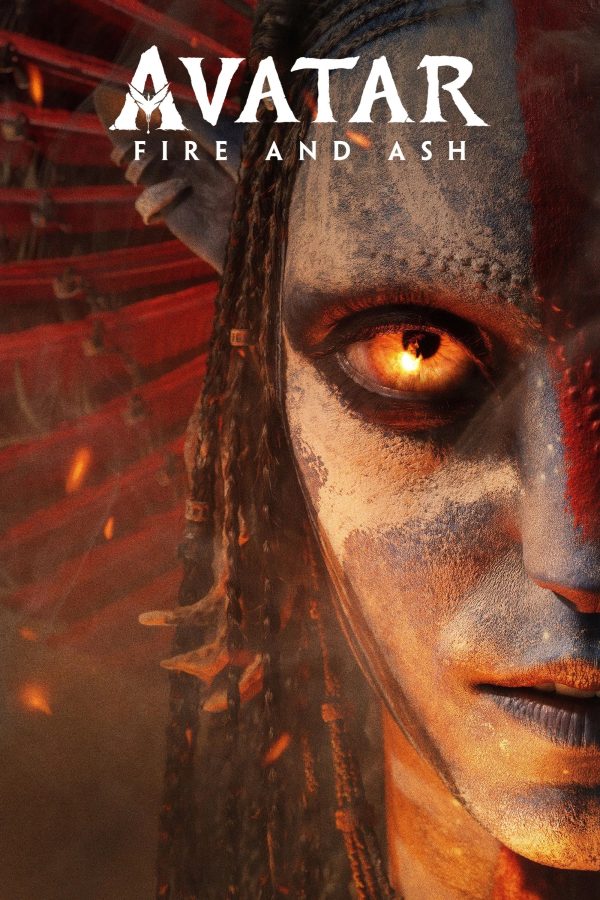
| Synopsis | The Sully family find themselves facing a new threat as they try to quell the ever-growing conflict between humans and the inhabitants of Pandora. |
| Length | 3 hours, 17 minutes |
| Release Date | December 19, 2025 |
| Rating | PG-13 |
| Distribution | 20th Century Studios, Walt Disney Studios Motion Pictures |
| Directing | James Cameron |
| Writing | James Cameron, Rick Jaffa, Amanda Silver |
| Composition | Simon Franglen |
| Starring | Sam Worthington, Zoe Saldaña, Sigourney Weaver, Stephen Lang, Oona Chaplin, Jack Champion, Britain Dalton |
No doubt requiring more funding for his exploration of the Mariana Trench, James Cameron has returned to his day job as a superstar director with Avatar: Fire and Ash, the third film in his franchise. Despite these films being the highest grossing box office successes in cinema history, and the fact that their creation continues to revolutionise the artform in general (along with paving the way for real-world scientific discoveries through either their innovation or funding), these films continually receive a lot of disdain.
The criticisms range from featuring supposedly recycled storylines, to the films being called flat out racist. There’s an odd disconnect that’s occurring, as the pushback does not match the movies’ astounding box office results. Obviously, there are people that love these films, which in turn has generated a cohort of naysayers declaring “they’re not that great” who love to hate them. So, before this latest production even released, the whines had already arisen, dampening any excitement surrounding this movie. Is there more of an alignment in opinion this time around, or will audiences remain split?
Content Guide
Violence/Scary Images: Multiple deaths shown on screen due to warfare situations (explosions, gunfire, arrows in chest, animal attacks). Suicidal ideation—a character puts a gun in their mouth. Discussions about executions and characters plot to murder. Characters are hunted by violent underwater sea creatures.
Language/Crude Humor: Rare dropping of the f-bomb and the s-word. Occasional use of other swear words like female dogs and h*ll. God and Jesus’ names are used in vain once or twice.
Drug/Alcohol References: Strong drug references—a hallucinogenic substance is used by an alien tribe in a ritual that encourages an altered state of mind. The audience sees the world in that drugged-out landscape for a few minutes of runtime.
Sexual Content: The bare breasts of an alien humanoid is shown briefly in a non-sexual situation. Two characters casually hook up for sex—they are seen laying together after it is implied they had intercourse. Some flirting between characters, including talk about a casual hook up being fun. Characters kiss; some are in married relationships.
Spiritual Content: There are heavy spiritual overtones throughout the story. An alien race worships a pantheistic deity that protects the planet and its inhabitants from harm. Biblical allegories could be argued, with characters representing Jesus, Satan, and possibly Abraham.
Other Negative Content: There are a lot of hostage situations. Scenes of (fictional) animal cruelty. Unethical corporations and operations.
Positive Content: Faith is rewarded. Characters are presented with situations where violence could provide a result, though they frequently choose to follow a different path, teaching that violence doesn’t have to be the answer. And of course the whole schtick about corporate greed being bad and environmentalism is good, yada yada.
Review
Despite what some people might say today, Avatar was a special film. It wasn’t just about the revolutionary special effects either. James Cameron effectively invented an entire fictional culture, ecosystem, and planet, which captured the imaginations of people the world over. On top of that was the journey of Jake Sully, who was given the chance of a new pathway in life, whose circumstances tapped into people’s desire for freedom. It was a neat, self-contained narrative that included awesome visuals that were in step with the film’s motif of ‘seeing’, which was inspiring even though the other themes revolving around environmentalism and colonisation were laid on rather thick.
The sequel, Avatar: The Way of Water, managed to harness something similar. Not only did it continue to impress audiences with revolutionary visuals, but it also kept expanding this well-built fantasy world and evoking a sense of awe. It introduced a host of new characters, a different culture, and explored a gruesome threat that involved high emotional stakes (and actually had the guts to enact the worst-case scenario). Yet the story structure and themes echoed the first movie, so while it was a more complex narrative, the criticisms of the original washed over into the sequel.
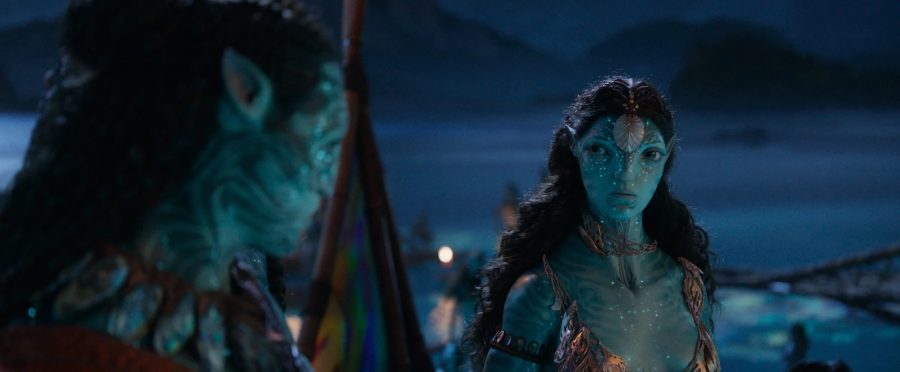
Avatar: Fire and Ash is an interesting case because it’s both similar and very different from the previous films. In a break from the pattern, this time Jake doesn’t throw himself into a new culture, absorb it, love it, and then defend it. There are new elements and new characters introduced, but it’s explored in a different fashion this time around. In short, the previous movies dedicated a significant amount of their runtime towards allowing the audience to fall in love with the world of Pandora, so that when it was threatened, the action would evoke a visceral reaction from viewers. There were awe-inducing sequences to achieve this response, such the bioluminescence, floating mountains, and flying scenes in Avatar, and the extensive underwater exploration and engagement with marine wildlife in Avatar: The Way of Water. In this third movie, all of this is considered assumed knowledge; you’re six hours into this franchise already, so hopefully you have developed some feelings towards this fictional environment! As a result, Avatar: Fire and Ash doesn’t spend its time sitting back and allowing the beauty of this planet to speak for itself, with those typical awe-inspiring sequences largely absent from this film. In a sense, it’s not as immersive or as ‘fun’, and viewers that were expecting a good dose of escapism may be disappointed.
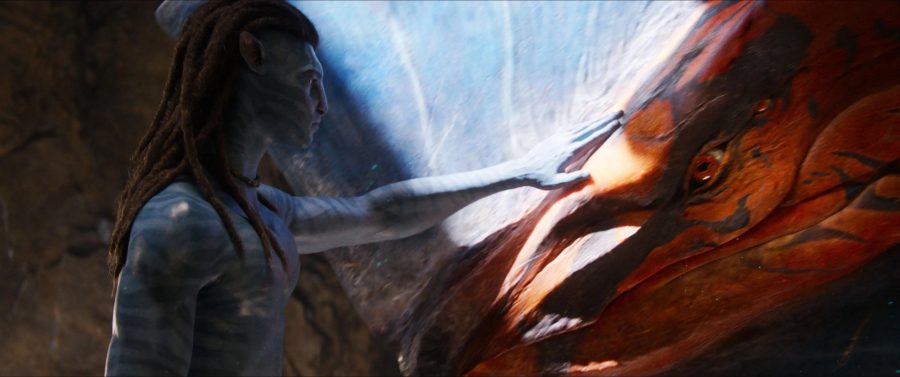
Instead, the film sets the task of actually resolving the left-over conflicts that arose in the first and second film. Essentially, it’s doing the job of a sequel, in that it’s continuing what has already been established as opposed to starting something that’s totally fresh. This retreading of narrative arcs in order to uncover a different outcome the second time around has earned criticism from viewers, with many stating that “there is nothing new here”. This is a gross over-simplification that seems to stem more from the popular need to hate upon these films more so than an actual fair assessment of the production.
Because it’s all rather complicated.
Avatar: Fire and Ash is repetitive with its action, but it also greatly evolves its characters and themes.
This dynamic will cause a split in a viewer’s opinion of the film. People that look to these movies more for their special effects and big action scenes are going to find their patience (and bladder) tested. This is because the movie doesn’t contain a unique action set piece that hasn’t already been seen in a previous film. Sky battles, maritime warfare, dangerous wildlife—you’ve already watched it. However, the story’s biggest weakness is that James Cameron seems to be struggling to find new ways to raise the stakes. There’s an elegance in the simplicity of a symbiotic relationship between a world and its inhabitants, but essentially a narrative that explores that dynamic can only ever threaten two things—the environment or the people. It was already pushing believability in Avatar: The Way of Water, but the continual barrage of kidnappings and hostage situations as a plot contrivance quickly becomes tedious, if not completely infuriating in Fire and Ash.
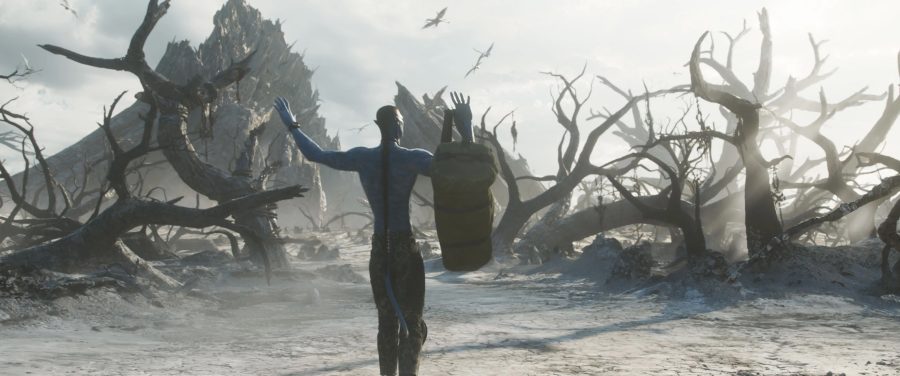
Yet that’s where the criticisms end. This franchise is no longer the “Dances with Wolves in space” story. It’s now firmly its own thing. The previous films were exploring more of a ‘first contact’ scenario, where one culture was introduced to another, much like other movies that tackle similar themes about colonisation and environmental conservation (such as the aforementioned Dances with Wolves, Pocahontas, or Fern Gully). However, Avatar: Fire and Ash is now taking it much deeper and grappling with far more mature and complicated concepts. It focusses on the following stages, where characters are trying to navigate the integration of two opposing cultures, leading into questions of loyalty, heritage, ancestry, immigration, and the unique challenges that bi-racial individuals feel when it comes to developing a sense of belonging. The evils of colonisation and the desire to whip up an emotional frenzy surrounding environmentalism are still present as themes (and as heavy-handed as ever), but it’s mercifully scattered amongst all the other aspects the story wishes to explore.
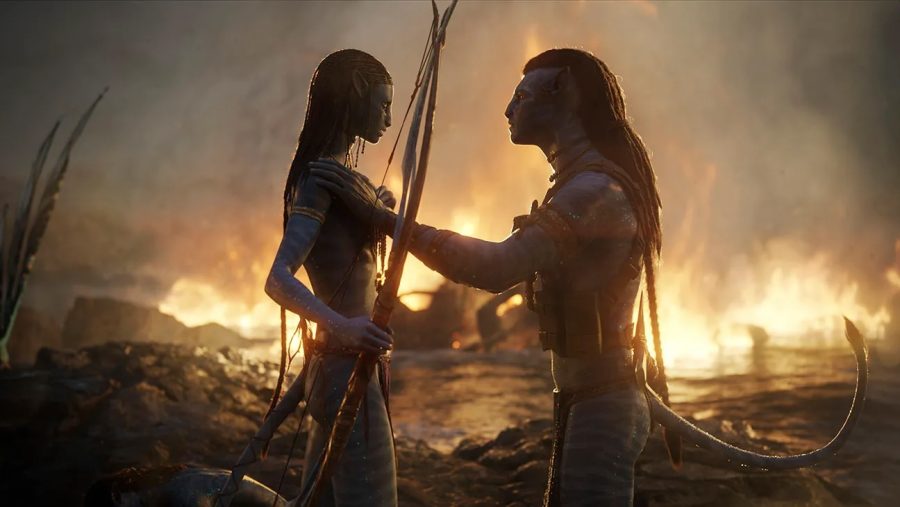
While action-orientated viewers will be disappointed, for those that love more character-driven stories, Avatar: Fire and Ash will deliver. Interestingly, Jake Sully barely grows as a person in this outing, to the point where it’s difficult to label him as the main character. Instead, the plot is largely driven by the supporting cast. Zoe Saldaña’s Neytiri continues down a dark and grief-stricken path that begins to engulf her husband. Meanwhile, Lo’ak (Britain Dalton) still struggles under the shadow of his (now-deceased) brother, undergoing a separate journey to find his place in the world of Pandora. But it’s the other characters that really capture the imagination. Viewers are finally treated to some answers regarding Kiri’s relationship with Eywa, Spider’s cultural misgivings harness the majority of the film’s themes, whereas Quaritch’s character is now wonderfully complex and morally grey, signifying a shift in direction of the film’s main talking points.
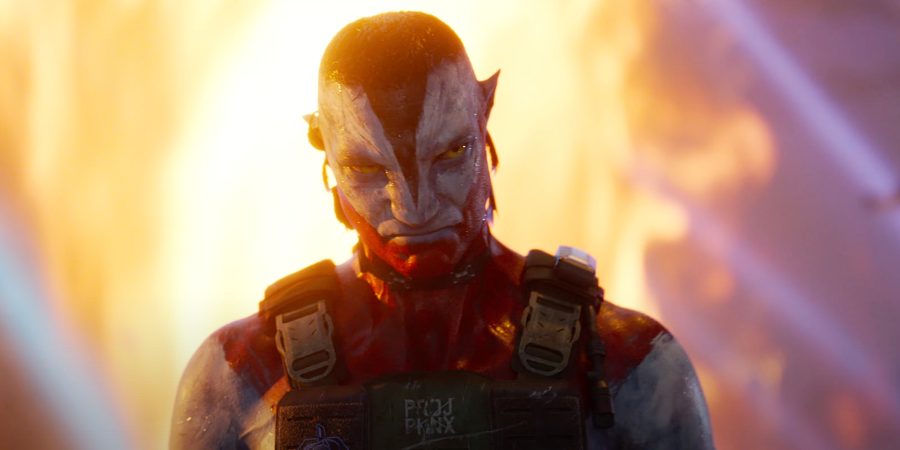
While the story is interesting, the execution does leave a bit to be desired. With each character effectively undergoing their own journey, the narrative is stretched to its limit in both scope and runtime. It’s a complex plot with many moving parts, which can justify the film’s length; some stories merely take longer to tell. However, it feels messy, and it’s a plot that’s difficult to neatly summarise, although James Cameron does do a more masterful job in juggling so many characters compared to his peers—other recent films that deal with multiple character arcs such as Wicked: For Good and Five Nights at Freddy’s 2 are certainly less refined.
But while it’s impressive that Cameron can still control and interweave such a sprawling storyline, there are aspects that simply don’t land. Some lines of dialogue are very blunt with its intended messaging, sometimes to the point where it’s unintentionally funny with its heavy-handedness. With so many different cultures interacting with each other— some real, some fictional—sometimes the lack of consistency with the accents is jarring, particularly with Lo’ak sounding like he’s Jonah from the parody show, Summer Heights High. Meanwhile, Jack Champion’s weaknesses as an actor are on full display—my heart goes out to him because he’s acting in a sea of motion capture suits, and he doesn’t get the benefit of CGI tweaking his expressions, but unfortunately his performance isn’t layered enough to pull off all of the complicated nuances required of his character.

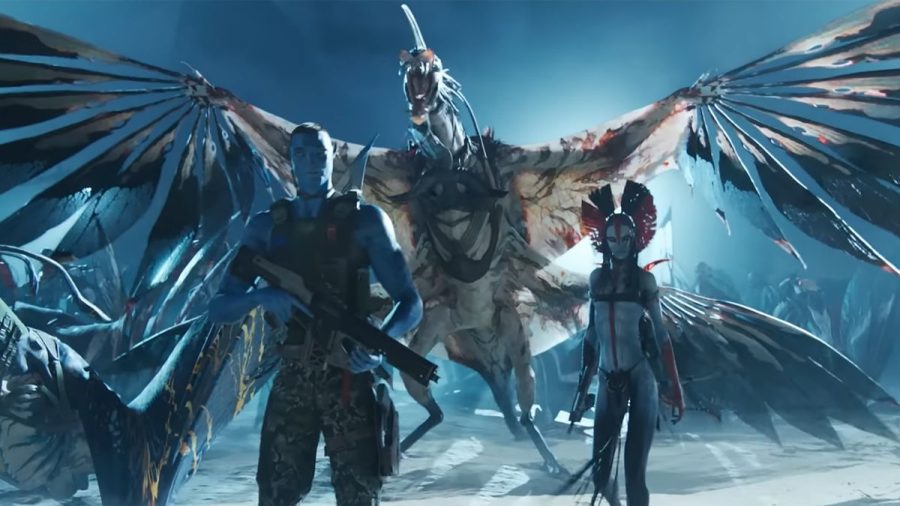
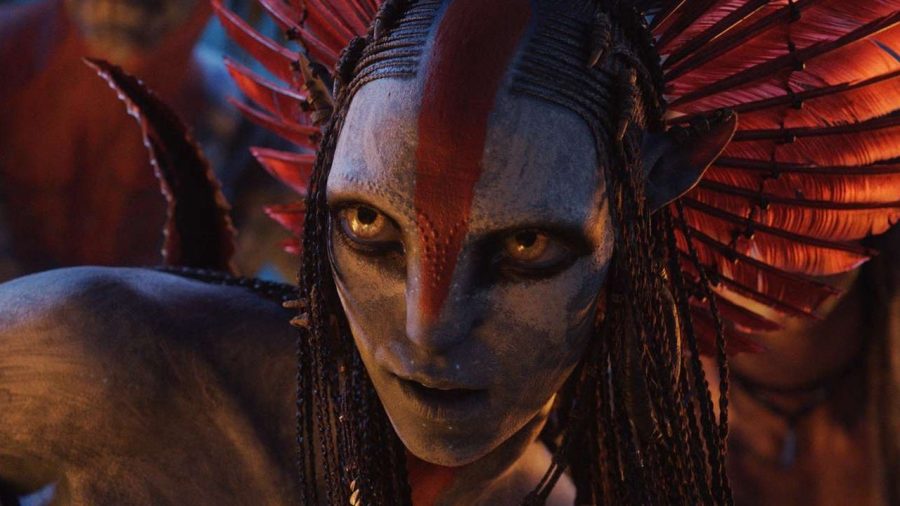
Yet, on the other hand, we are treated to a new villain, Varang (Oona Chaplin), who invigorates the action and steals the show every time she’s on screen. Her character adds some necessary complexity to the franchise, allowing the storytelling to finally evolve beyond the ‘Pandora = good, humans = bad’ messaging found in the previous films. Varang’s presence also reintroduces the theological themes that were lightly explored in the original movie, with her lack of belief and self-sufficiency challenging the relevance of the pantheistic deity known as Eywa. There’s such a strong theological emphasis this time that it would be apt to say that this franchise can no longer be described as “Dances with Wolves in space,” but rather “the Bible in space”. Christians will notice some fairly strong allegories across this story, with many characters representing the actions and purpose of someone in Scripture. It’s not a neat or direct comparison, as God and Eywa are fundamentally different in many aspects, but it is lovely to see a mainstream film openly embrace the importance of faith in higher powers.
Avatar: Fire and Ash is screening in multiple formats, including a high framerate and 3D version. Maybe we’ve been spoiled in the past with an overabundance of CGI-laden films and the franchise’s own ground-breaking cinematography, because this outing doesn’t seem as spectacular. There is one scene involving a hallucinogenic which really does benefit from these cinematic add-ons, but if it is a struggle to find a screening in those formats, this time you’re not missing out on much. My recommendation for what version to see is my standard line of thinking—it’s hard to replicate these conditions on your TV, so you may as well see the film in its full glory while it’s available.
Ultimately, Avatar: Fire and Ash is a decent yet chaotically elongated story that will operate as a jumping off point for those that are oddly hate-watching this thing. For some reason, people have gotten into the habit of seeing these big budget spectacle films in cinemas even when they’re only half-invested, and for those that are only looking at the surface level content, this third film is not going to satisfy. But for those that are all-in and are curious to see where all these characters end up, Avatar: Fire and Ash will not only deliver, but will have you wondering where they’re going to take the story from here.
Positives
+ Character development
+ Themes
+ Theological layering
+ Special effects
Negatives
- Acting
- Heavy-handed messaging and dialogue
- Repetitive action and plot
The Bottom Line
Avatar: Fire and Ash will leave half-hearted viewers behind with its sprawling, and somewhat repetitive action, but it will continue to fascinate those who are invested in these characters.