

Overview
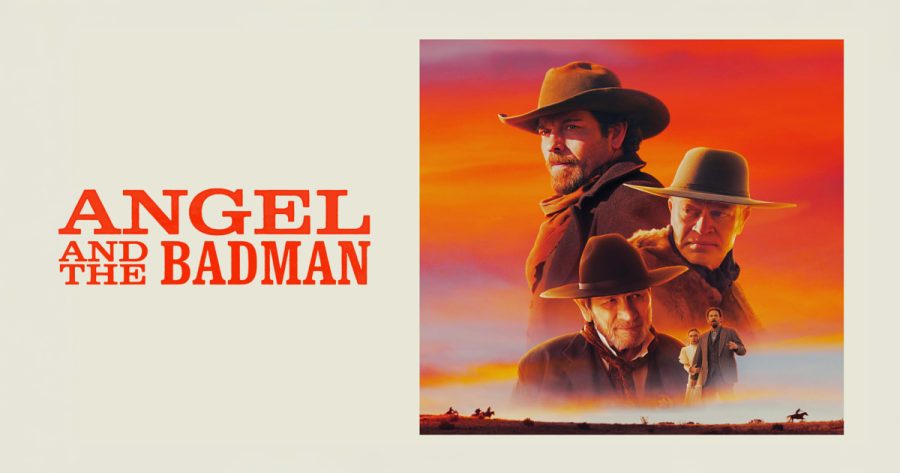
| Synopsis | A gunman on the run seeks refuge from a Christian family that welcomes him, slowly transforming his heart from a criminal to a man who can put his past behind him. |
| Length | 1 hour, 45 minutes |
| Release Date | October 9, 2026 |
| Rating | PG-13 |
| Distribution | Angel |
| Directing | Julio Quintana |
| Writing | Kevin M. Townsend, Christopher Tuffin, Jaime Hernandez |
| Composition | Hanan Townshend |
| Starring | Zachary Levi, Neal McDonough, Tommy Lee Jones |
The original Angel and the Badman holds a curious place in history as a notable footnote in the career of John Wayne—one of the greatest western stars in Hollywood. Coming less than a decade after his career-making performance in John Ford’s Stagecoach, the film captures some of the same energy that is seen in his earlier performances. It succeeds as a “leisurely Western”—as The New York Times notes—that is more about faith and love than “roaring action.” It is neither his first nor best western, nor was it his best performance of the decade, but it was a solid western at a time when the genre reigned supreme. In this regard, it is perfect fodder for a remake. Granted, this is hardly new for the western genre.
Content Guide
Violence/Scary Images: Violence including murder, depictions of dead bodies, snakebite imagery, and bloody bullet wounds.
Language/Crude Humor: Harsh language including h***, b*******, and w****.
Drug/Alcohol References: Characters drink alcohol.
Sexual Content: Some references to sexuality; nothing depicted.
Spiritual Content: Characters constantly speculate on “God’s plan” and attend church.
Other Negative Content: Some content may not be safe for sensitive viewers.
Positive Content: Themes of repentance and redemption.
Review
The classic western is one of the few Hollywood genres where remakes can often meet or exceed their predecessors. The remakes of True Grit, 3:10 to Yuma, Django, and the underrated Magnificent Seven, show that the genre is pliable enough, where recreations of old stories with new energies and casts can produce surprising results (not universally though, as the Stagecoach and Alamo remakes can attest to). Regardless, Angel and The Badman was a modestly successful film with plenty of room for improvement. And given the fascinating Quaker theology behind its premise, it made a tempting target for a Christian production company like Angel Studios to reshape into something new.
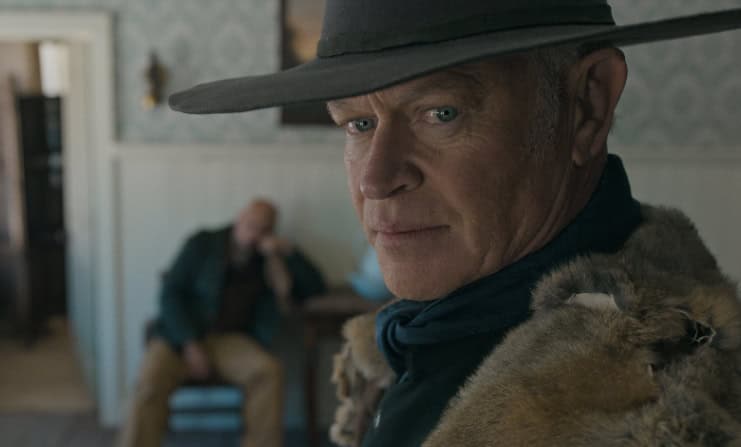
The movie starts with a fascinating character intro: a wanted gunman is caught by a Marshall who suspects him to stealing Confederate gold during a recent infamous train robbery. Saved from sudden death by rattlesnake, the Marshall allows the bumbling gunfighter to make excuses, pretend to quote Scripture, and run away with the wise warning than men like him always eventually get caught for their crimes. After surviving these encounters, the gunfighter Quirt Evans stumbles wounded upon the home of an innocent Christian family led by an aging matriarch and her two daughters. Surprised by their hospitality, he begins to soften and build relationships with them, particularly the young widow Penny and her excitable son Johnny, all while his dark past hangs on the horizon and haunts the possibility of a new future beyond his violent ways.
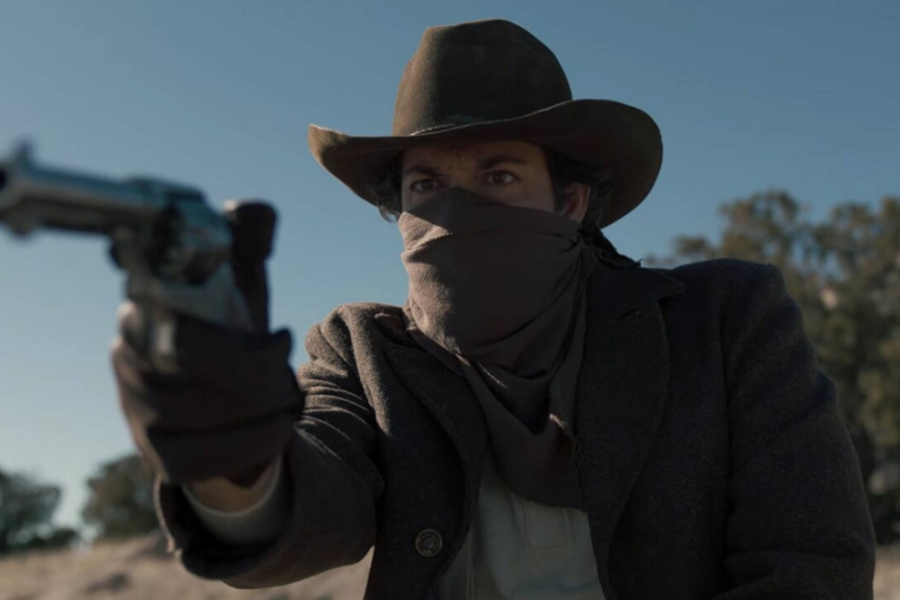
The movie literalizes much of this subtext early on when Quirt sees a fever dream of the Marshall as the grim reaper overseeing his hanging. His entire character is rooted in his belief in the ability of his own skills and strengths. He doesn’t trust others—let alone praying to God—and casually lies, bluffs, or threatens others to achieve his ends. This stands in harsh contrast to the pacifistic tendencies of his host family, who constantly encourages him to trust God in the face or uncertainty. Indeed, speculation of “God’s plan” is one of its central themes.
Certainly, there isn’t much originality in a premise like this. This is a story that’s been explored from everything from Hondo to Shane and Pale Rider. A film like this lives or dies via its own execution and charisma. Zachery Levi certainly fills the role with a needed level of admirable charisma. He plays the exasperated gunslinger with enough grizzle to feel like a hardened man with a heart of gold.
As far as major plots and scenes, much of the film is functionally identical to the original. There are some notable structural changes to the ending. In some notable ways though, I actually think the changes are to its detriment. The original film is a more sophisticated story with more complex emotional consequences and a denser plot. The original is about the full transformation of a violent criminal into a peaceful man who is totally willing to embrace domestication and peace. The remake undermines some of these themes in favor of focusing on the more immediate theme of relying upon God, giving many of its late period solutions to acts of intervention rather than direct attempts to solve situations via direct action.
There is a quiet irony that the original film (produced by Republic Pictures, which was famous in its day for lower quality B-movies) actually manages to be a more theologically sophisticated film by right of the fact that its plot is capable of digging deeper into the implications of Quaker pacifism than a modern faith-based evangelical flick. The original succeeds in showing a man’s transformation in full, while this succeeds at showing the glimmers of a man first repenting. This is not to say it’s a bad or dumb film. By my standards, all modern westerns are underappreciated. Even the mediocre ones are worth celebrating merely because they exist at a time when the genre is at an all time low. It’s still a watchable and fun little western flick, albeit one that I don’t feel fully transforms the original story into something completely new. And that doesn’t make it the easiest sell when the entire original film is available for free online.
Positives
+ Strong themes of redemption and transformation
+ Solid performances and cinematography
Negatives
- Comparatively weak as a remake
- Abrupt ending with less sophistication regarding themes
The Bottom Line
Angel and the Badman isn't a bad movie, but it doesn't live up to the potent themes and strengths of the John Wayne film of the same name.