
Review – Emberwind Roleplaying Game
Hero Manual & The Songweave Tapestry
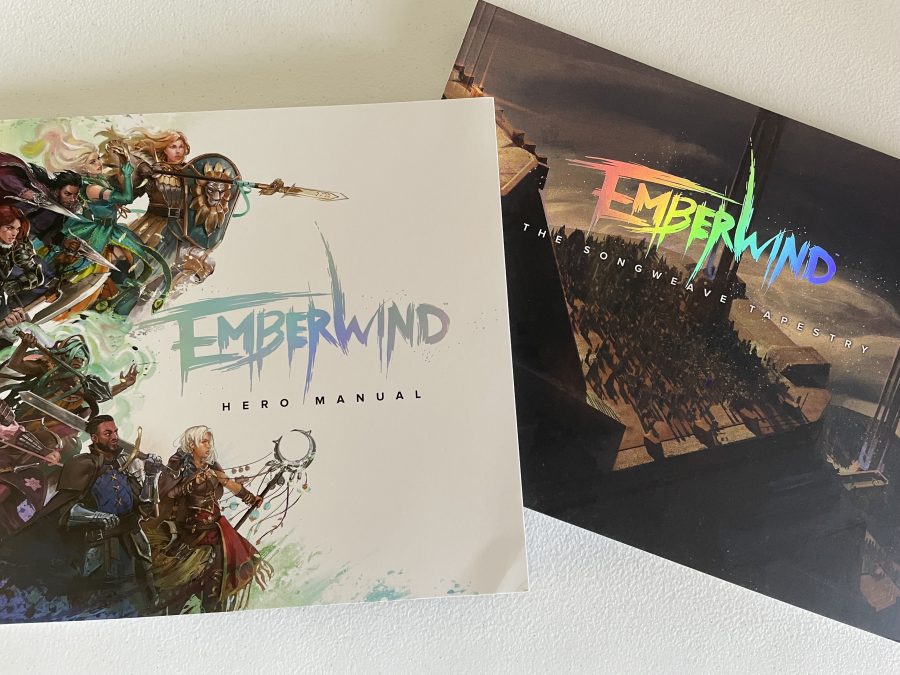
| Designer | Derek Chung |
| Artist | Toma Feizo Gas and others |
| Publisher | Nomnivore Games |
| Category | Roleplaying Game |
| Length | 120 pages / 208 pages |
| Release Date | 2026 |
| Player Count | 2+ |
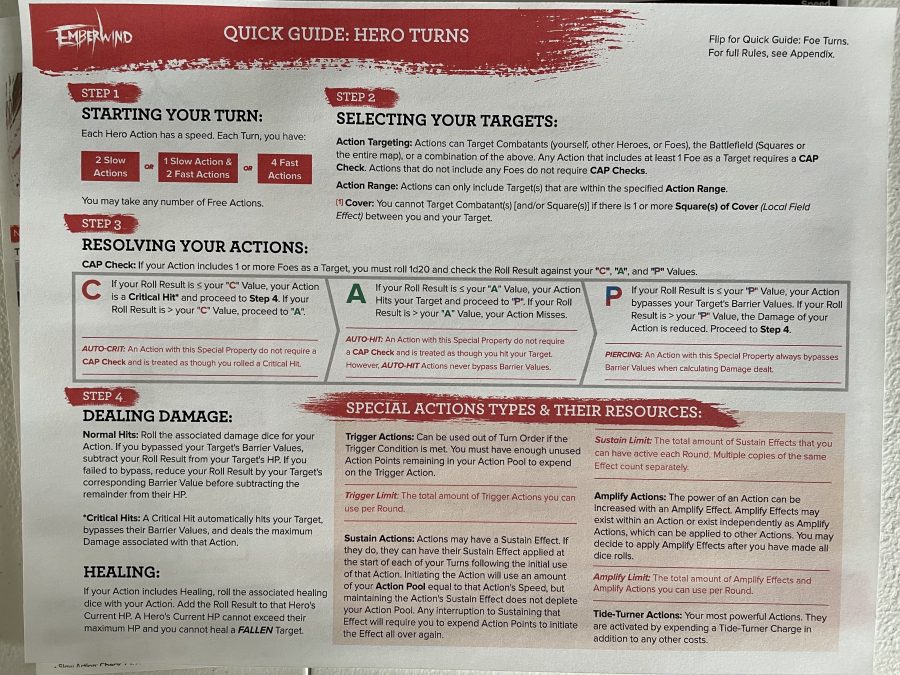
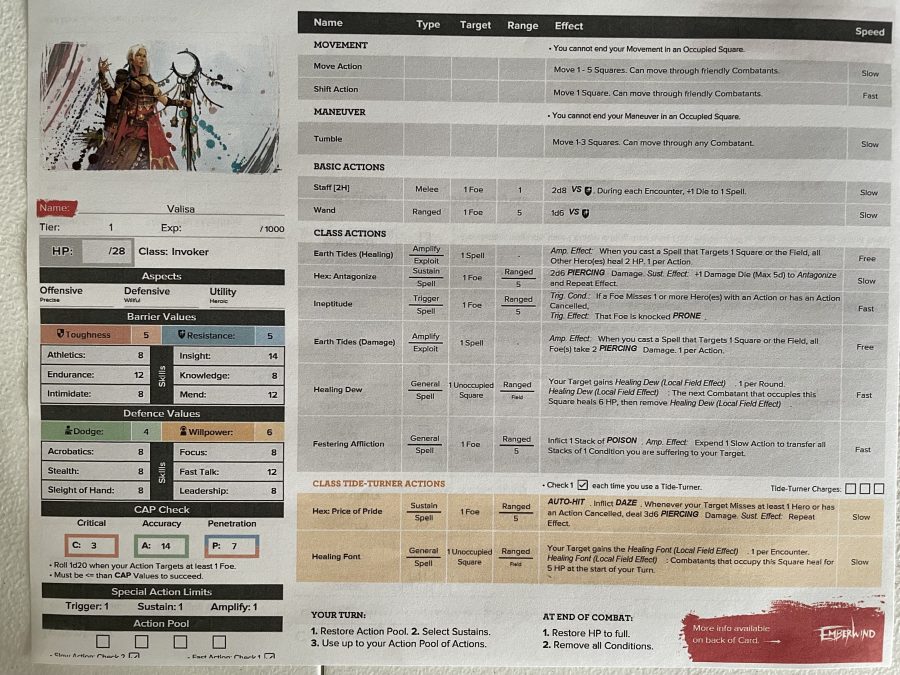
Emberwind is a, “rules-light, tactics-rich, learn-as-you-go role-playing game” from Nomnivore Games. Emberwind features 9 playable classes that you can customize quickly by choosing specific or pre-chosen Aspects, or by going the more traditional “Roll dice and assign Attributes” route. If you’ve ever felt overwhelmed looking at the nearly page-long list of skills on a D&D sheet, Emberwind manages to simplify it down to 4 main skills with 3 sub-skills each; for instance, your Toughness governs your Athletics, Endurance, and Intimidate skills. Another big difference is players will still roll a 20-sided die, but you want to roll lower than your Critical, Accuracy, and Penetration scores (CAP). Rolling lower than your “C” value means it’s a Critical hit, rolling lower than your “A” means it hits, and lower than your “P” means you get to bypass the target’s Barrier values. In addition to these small changes, the game was built from the ground up with simplicity and inclusivity in mind – simple things like softcover books that open landscape style so they can easily lay open. So is it worth it to check out a new RPG, or is it a well-meant swing and all-to-real miss? Read on for the Review!
Content Guide
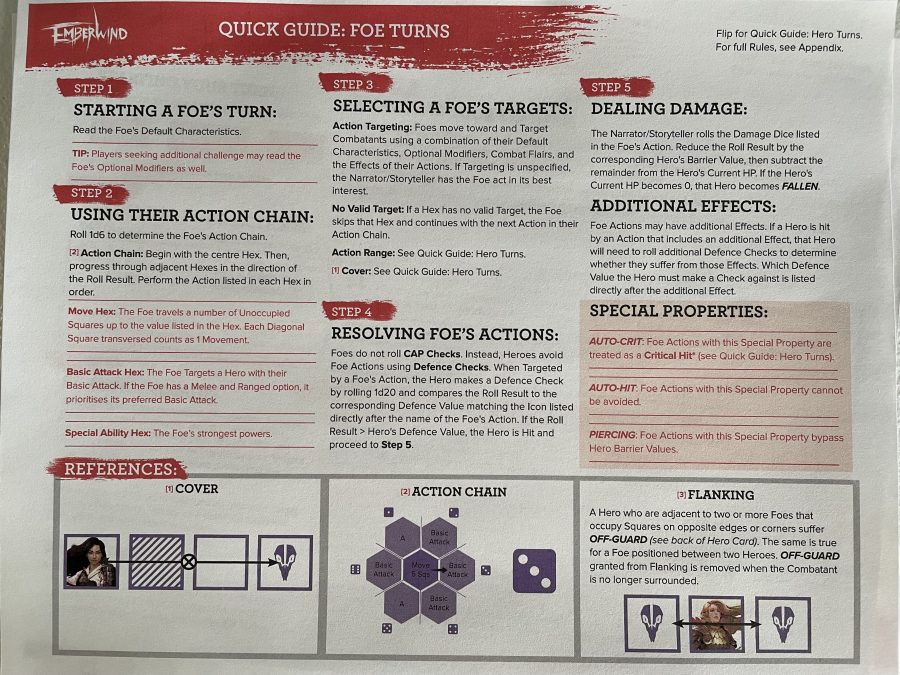
As this is a Role-playing game, the usual warning applies – players can fight enemies with weapons, spells, and non-combat options. The Songweave Tapestry is kicked off with an unknown assassin killing an NPC’s family member. Players can gain injuries that follow them, or become killed in combat; alternatively, they can just get knocked down (“Fallen”) until the end of combat, should the party survive. Enemies can be controlled by a Storyteller, or by using the game’s Action Chain, where a D6 determines their actions.
Review
Hero Manual
There are a lot of Roleplaying games out there today, and many of them try very hard to reinvent the wheel to capture player’s attention. Emberwind does a couple things to flip expectations like asking players to roll as low as possible, but it also simplifies character creation and playing so that you can jump in and start playing in literal minutes, whether you use one of the pregenerated characters or decide to hop onto their website and create one from their web form, which only took about 10 minutes (including the time it took me to dilly-dally over whether I was going to use the Aspects or Attributes systems). You choose a Hero, come up with a concept like a wandering Monk or a down-on-their-luck Fighter, decide what Tier you want to play at (Tiers are like levels), decide what Aspects or Attributes you want, pick your Skills/Occupations/Maneuvers and then Equipment, and finally pick any Class actions. The Hero Manual is set up so that these steps are all in order, and you can easily flip through them in order to set up your character—no flipping back and forth between a “Character Setup” chapter and the section for your specific Class. Also, the books are very easy to read thanks to another accessibility choice: because the book is laid out horizontally, they can do up to 3 columns of text, or 2 and a side photo, which makes it feel a lot cleaner than getting hit with a wall of text.
An optional 8th step in character creation is the Anchors and Keepsakes, which give players chances for deeper role-playing and rolling with Advantage when it comes to their Anchors. An Anchor is a special topic, person, or organization from a character’s past that can end up helping them in the game, but the book makes it clear this is supposed to enrich the immersion, not provide a chance for power gaming. Keepsakes are items with special meaning to the characters, and can be literally anything: a book, a token from a friend, a family heirloom. It doesn’t even have to be equipped, just in their inventory. Keepsakes also provide certain bonuses that can be used once per Milestone or once per Combat.

The Songweave Tapestry
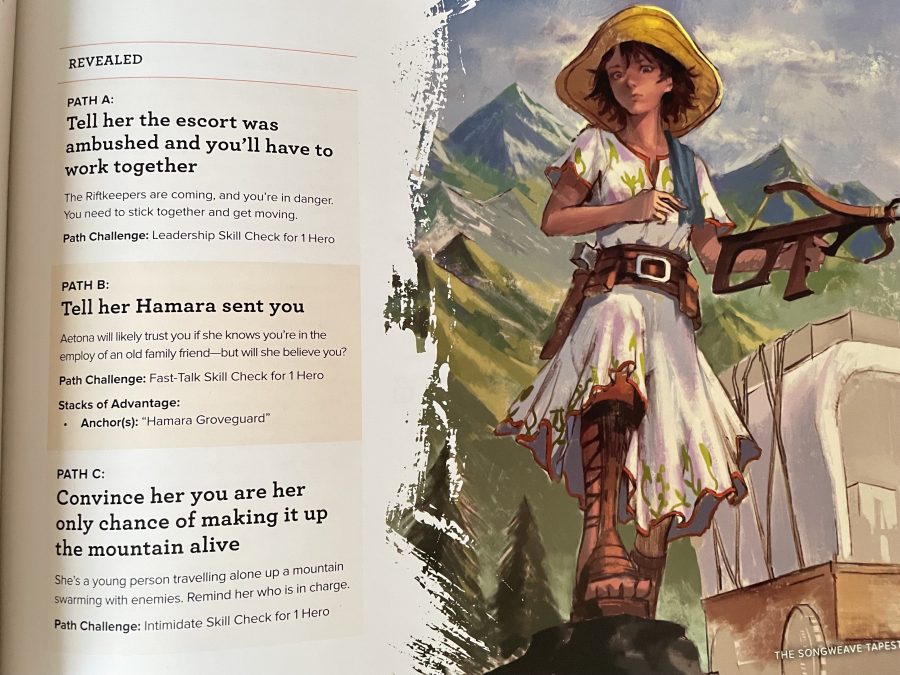
The Songweave Tapestry sees you joining forces with your fellow players at the behest of an employer who wants to keep a young girl alive, who just lost her aunt to an assassin (your employer was the aunt’s friend). She needs you to get the girl safely up a mountain to the capital city at the top, and there’s no shortage of antagonists who want to stop you. What’s interesting about the way the book is set up is it slow-drips new rules and information so you can just learn as you go, instead of someone having to study the book before anyone can play. Also, it plays out much like a Choose-Your-Own-Adventure book, where you can have branching paths where the party can vote on what to do next or split off as everyone tackles the task differently. Sure, you can spend extra time in town searching or talking, but it might negatively affect your next search roll when you finally decide to go to the next quest location.
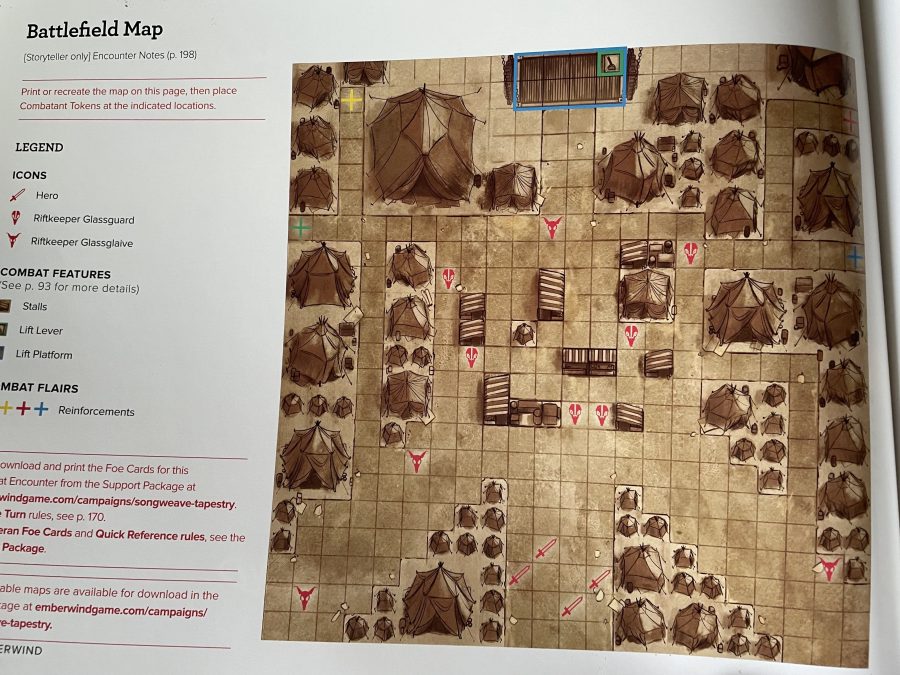
Both books also come with digital versions and Songweave even has Roll20 support for online play. The website is super useful, even in its current “Under Construction” state. The Map Pack that you can download after buying the book has, well, maps, but the Support pack has Pregenerated character sheets with alternate classes for each of them, as well as enemy cards with their abilities and Action Chains, and also dialog options for the party depending on how well the pass their skill checks.
Emberwind is an interesting new direction for a roleplaying game, where it prioritizes and respects the player’s time and what they want to get out of the game. If you want to spend time rolling dice and assigning points you can, but if you want to grab a pregenerated character and start playing before anyone’s finished a mouthful of snacks, you can do that too! I also love having the option of not forcing a player to be the Storyteller and letting dice determine the enemies actions. Everything is built with accessibility and player choice in mind, and it really feels that way. If you want to try a new RPG that doesn’t break the wheel trying to reinvent it, but feels new and respects your time and choices, give Emberwind a try.
Review copies of books and their digital codes were provided by the publisher.
The Bottom Line
If you want to try a new RPG that doesn’t break the wheel trying to reinvent it, but feels new and respects your time and choices, give Emberwind a try.
8.5
