
Overview
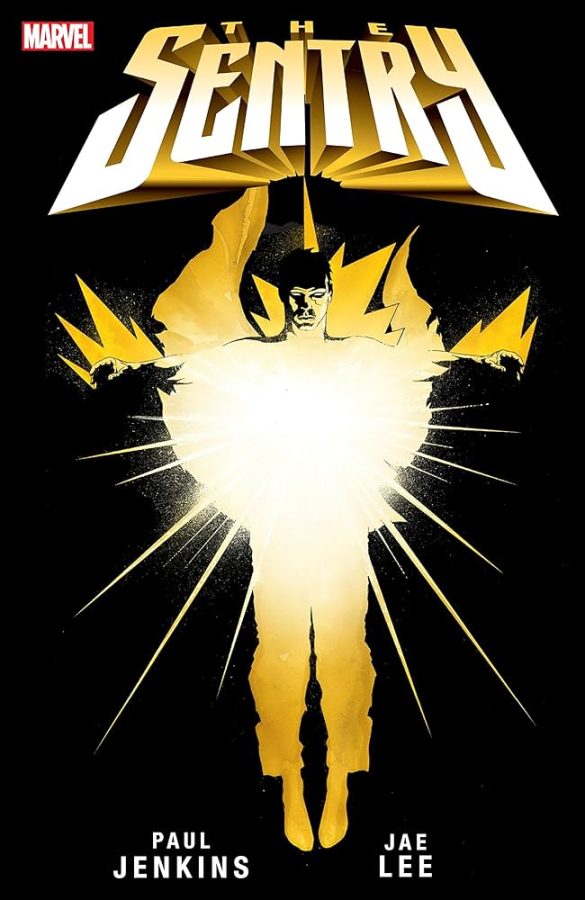
| Synopsis | When Bob Reynolds begins experiencing what be believes are memories of his life as superhero the Sentry, he starts uncovering who he was, who others remember him as... and why he and the world were made to forget him. |
| Author | Paul Jenkins |
| Artist | Jae Lee, Phil Winslade, Rick Leonardi, Bill Sienkiewicz, and Mark Texeira |
| Publisher | Marvel Comics |
| Genre | Superhero |
| Length | 240 pages |
| Release Date | September 2000-January 2001 |
In January 2000, Wizard Magazine announced that Marvel artist Artie Rosen passed away. Stan Lee was interviewed, reflecting on his collaborations with Rosen during the Silver Age of Comics. In February, Wizard revealed a curious finding: Artie’s widow had stumbled across a box of his old illustrations and sent them to Marvel. Writer Paul Jenkins intercepted the package and, upon examining the contents, found what appeared to be sketches of a previously unknown superhero, the Sentry, developed by Rosen and Lee in 1961.
Before the Fantastic Four.
The finding was historic. A hero that predated the FF called the Marvel Universe’s origins into question. Jenkins and artist Jae Lee (no relation to Stan) worked with Joe Quesada’s Marvel Knights imprint to whip up a new imagining of the Sentry. The character would be an amnesiac, having forgotten he once existed in the Marvel Universe… and the Marvel Universe would have forgotten him, too. With each issue of the five-issue limited series came an interview with (Stan) Lee, who, despite his self-admitted faulty memory, tried to recall his and Rosen’s development of the Sentry.
Eventually, fans and media outlets deduced the truth: this was all a publicity stunt. Artie Rosen had never existed, and the Sentry was not created in 1961. Jenkins had actually been trying to sell the character’s story for years. With some creative marketing from Quesada, Lee, and Wizard, he perpetuated the myth to generate momentum. The stunt worked. The Marvel Knights Sentry series sold well, and the character has remained in comics for twenty-five years, even making his recent MCU debut in Thunderbolts*.
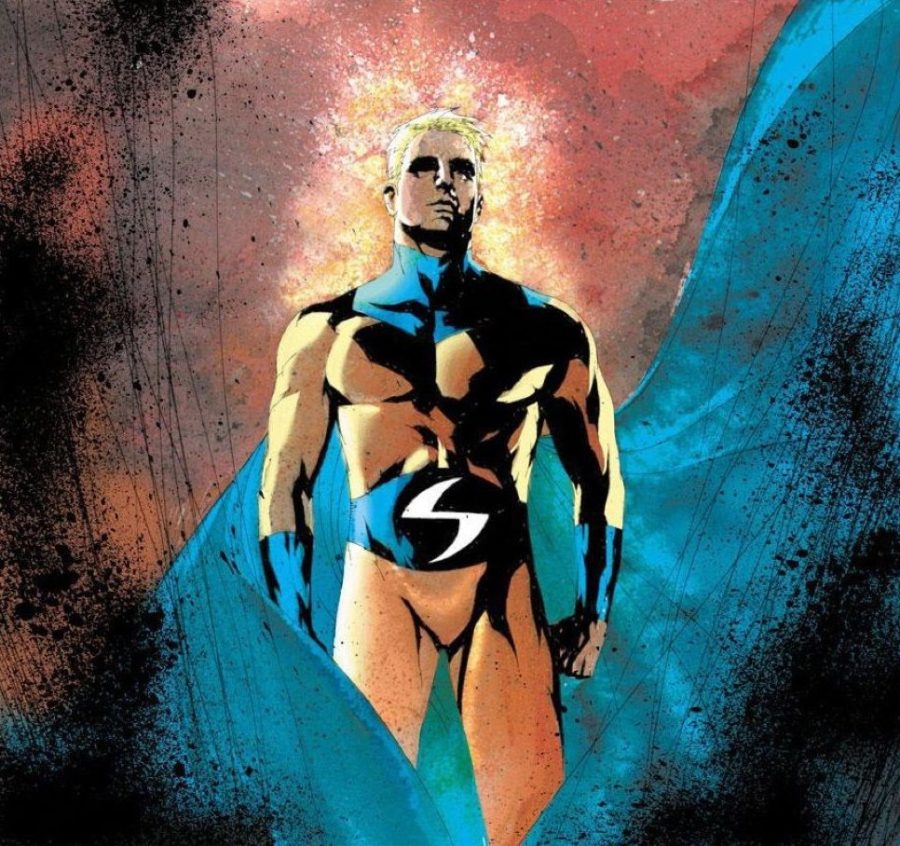
Though Lee’s forgetfulness was faked, the Marvel Universe’s wasn’t. The Sentry had existed, until some event made the world forget. Even the Sentry forgot. He’s just Robert “Bob” Reynolds when the series starts… but something pokes at his memory, and he begins uncovering who he is. As he remembers, so does the world, and we quickly learn that the Marvel Universe may soon wish Bob’s memories had remained dormant.
Content Guide
Violence: Several characters engage in fisticuffs where people are punched, struck, or zapped. A few people are stabbed. We’re told, but not shown, that someone is crushed. Other people are killed by an unseen force. A man dies of an apparent suicide. A father hits his son. Someone kicks a dog. We see several dead humans and animal bodies.
Sexual Content: A couple kisses. A drunk man hits on a woman. Someone jokes about a television skit with gay superheroes. A character wonders if someone else cross-dresses.
Drug/Alcohol Use: A few characters drink; a couple are depicted as drunk. A hero’s powers are derived from a serum which, it’s implied, they become addicted to. Someone keeps their drinking a secret.
Spiritual Content: A few references are made to hell. A villain called the Void is said to steal souls and is compared to the devil. The Sentry is called bigger than God and better than Jesus. Someone is referred to as immortal. Someone references evolution. A man says a people group believes in gods. Prayer is referenced. Dr. Strange performs magic. Thor makes an appearance.
Language/Crude Humor: Several uses of God and Jesus’ names in vain, plus a few instances of h*** and two uses of “bloody.”
Other Negative Content: Characters keep secrets and lie to cover up actions in the name of good intentions.
Positive Content: Characters help and save one another and rescue other people. Several heroes gather around a friend in a moment of oncoming tribulation. Multiple heroes remember how the Sentry brought out the best in them, through mentoring or friendship.
Review
At the Turn of the Sentry
Much like the publicity stunt created around the story, this original Sentry series — comprised of five main issues and five one-shots illustrated by different artists — is a long con. The mystery is meant to lead the reader forward. Questions drive the narrative: who is Bob Reynolds really? Why has the world forgotten him? And why is he remembering now? Under all those questions lies a story wrapped up in identity, of a man who learned he used to be more than he is and desperately hopes to rediscover that sense of “more.”
The Sentry derives its strength from its title character, the amnesiac Bob. For some of the series, you’re asked to debate with the superhuman supporting cast as to whether Bob really used to be a superhero…or if he’s just an off-kilter alcoholic. Jenkins plays up the mystery well, toying with the audience’s expectations as you discern just who Bob is and whether he should be remembered.
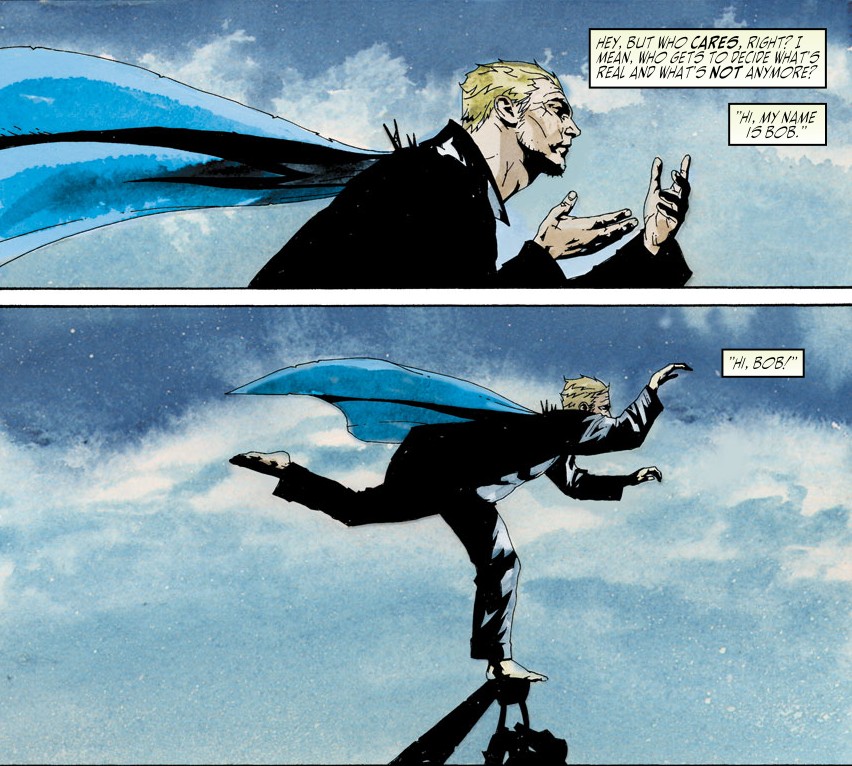
Thunderbolts* took a more distinct mental health approach to the character; this comic series skirts around that. Some folks think Bob is a little unstable when he suddenly appears balancing on a crane, but otherwise, Jenkins is more interested in emotional application. Bob is a man filled with longing, if one can be “filled” with a yearning for what they don’t possess or have lost. As he remembers his years as the Sentry, he remembers the hope he instilled in his fellow heroes. He was a friend, a mentor. They called him the Golden Guardian of Good! He possessed the power of a million exploding suns! Why would he just disappear? How could he just disappear?
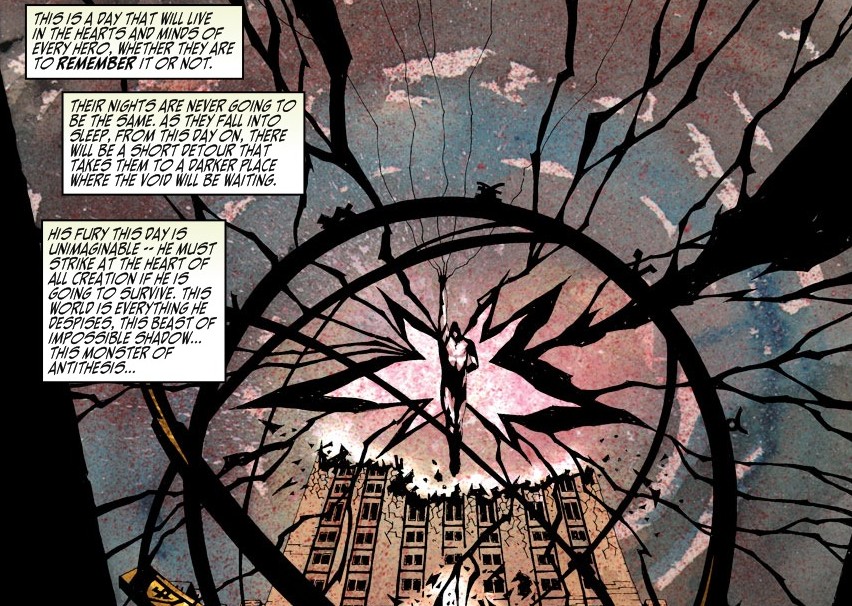
Jenkins and Lee aptly convey that loss across the issues. We’re shown a world on the verge of losing hope, made manifest through the reappearance of the Sentry’s arch-nemesis the Void. Jenkins and Lee craft a shadowy creature of fear that drives icy shards of despair into our assembled heroes, a counterpart to everything the Sentry is intended to represent. Again, it’s a slightly different angle from the film, but for the purposes of the comic, it works. The Void’s emphasis on consuming souls and feasting on fear contrasts the hope the Sentry is supposed to inspire. With the Void returning, and with Bob striving to have people remember him, the question dangerously lingers: can the Sentry inspire enough hope to combat the despair the Void generates?
Bob the Re-Builder?
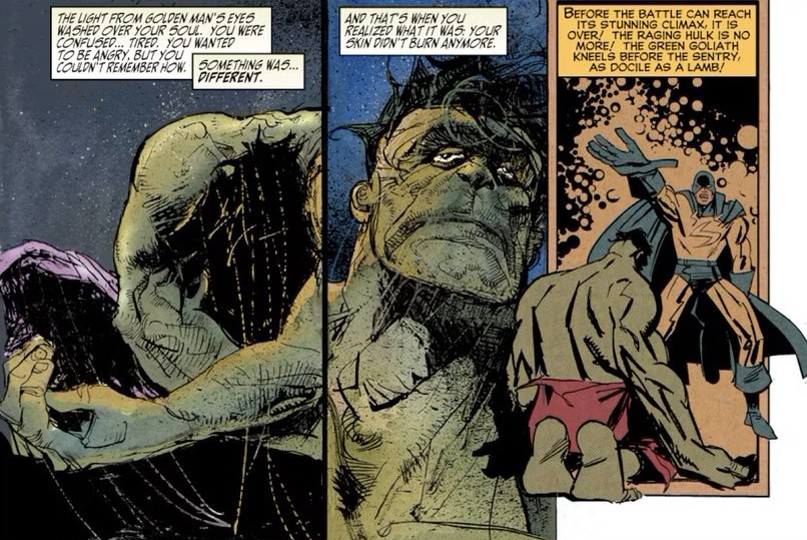
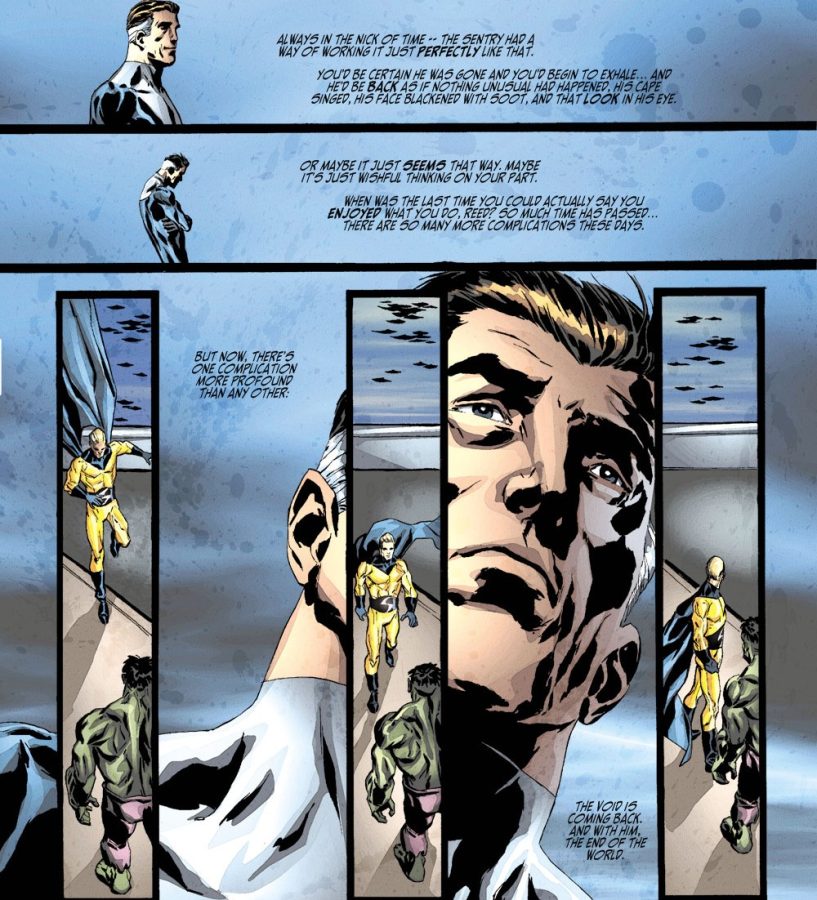
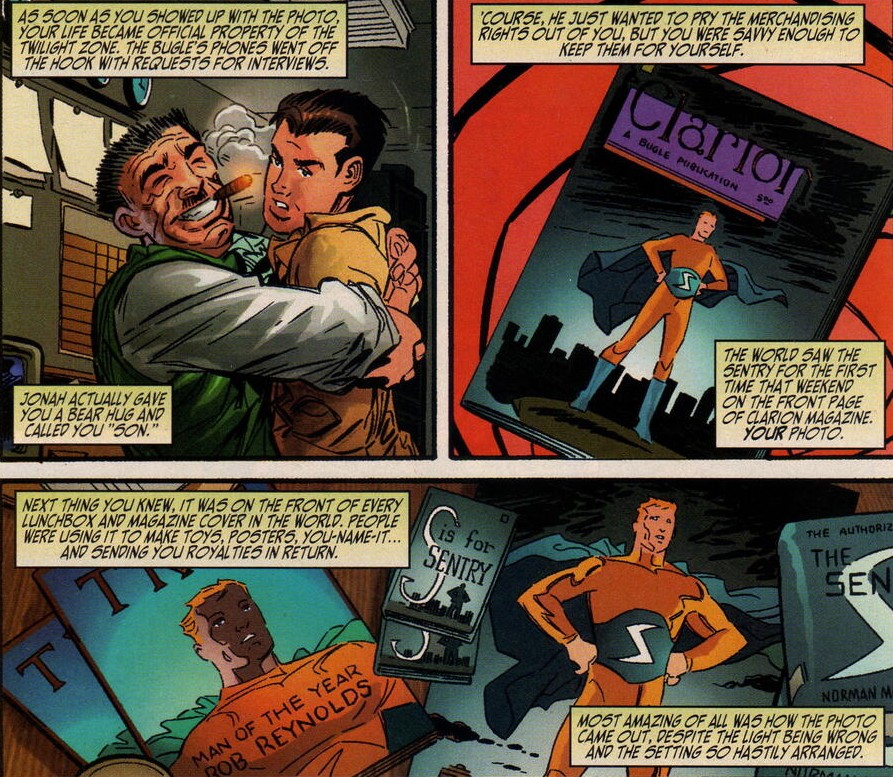
Perhaps the most interesting dynamic Jenkins and Lee play with is what that hope once meant and what was lost when the Sentry vanished. We see the Golden Guardian of Good befriend the Hulk and indicate the man-monster could have evolved beyond his brutish nature if the Sentry had stayed his friend. Peter Parker snaps a Pulitzer Prize-winning photo of the Sentry and enjoys the accolades which come with such an achievement… until that image and the accompanying accolades disappear with the Sentry. As Reed Richards’ own memories return, he recalls the Sentry was his best friend, that he was Bob’s best man! Those memories, once fully joyful, are now tinged with sadness.
If you’re willing to suspend your disbelief in believing the Sentry was always present in Marvel’s history, then you can easily believe the Marvel Universe could have been different, maybe more hopeful, if the Sentry had never vanished. Maybe the Hulk wouldn’t have spent years on the run or maybe Peter Parker would’ve had better career prospects. But that didn’t happen. Yet with the Sentry’s return comes the promise of new hope. Is there a chance he could inspire these heroes to become their idealized selves?
In positing these ideas, Jenkins tugs at the heart of our heroes’ humanity, a notion instilled in these characters from their origins. Stan Lee, Jack Kirby, Steve Ditko, and others always intended their heroes to be real people with strengths and flaws. But these creators approached their characters from who they were — Peter Parker was always an awkward, nerdy young man; the X-Men were pariahs; the Hulk a hunted loner. Jenkins compounds that struggle by taking who these characters are and making us believe they could have been more. Like the Sentry lost his memories, our heroes lost opportunities to grow beyond the narratives they’ve been cycled through.
Comics are cyclical by nature — Peter Parker may find some success, but it will always backfire on him. The Hulk may be temporarily accepted by humanity, but a trick or a mindless rampage will reinforce the notion he’s just a monster. And with the Sentry not there to help them rise about their inherent brokenness… how could they ever become “more”? In this way, The Sentry becomes a commentary on the state of comics themselves. While some comics may celebrate continuity and the industry’s seemingly eternal storytelling methods, The Sentry challenges the idea. Why can’t the status quo be different? Can there be change, hope, growth? Must our heroes remain broken?
Some Dross in the Gold
Some readers may struggle to accept the Sentry’s sudden reappearance. Your perspective on Bob may hinge on how well you believe Jenkins and Lee weave him into Marvel’s decades-long past, and it is here where I have some slight scruples. Four of the five one-shots team the Sentry with a hero or team of heroes, elaborating on the past adventures hinted at in the preceding pages. The stories are delightfully illustrated, with Rick Leonardi, co-creator of Spider-Man 2099, penciling the original Wall-Crawler and Bill Sienkiewicz providing a Hulk clearly inspired by Frankenstein, for example. The one-shots are also charming, with the FF tale delivering a narrative as fun and corny as any Silver Age story and the X-Men chapter offering decent insight into Warren Worthington III’s the Angel.
My issue with these one-shots is that they’re only integrated skin-deep into Marvel history. Jenkins wants us to believe the Sentry has been around forever, but we’re not given scenes from classic or known narratives to back that up. Did the Sentry help the Fantastic Four face the Mole Man or the Skrulls? Was he a founding Avenger? Did he fight the Sentinels with the original X-Men? The continuity nerd in me just wanted some more history to sink my teeth into. When Bob’s memories return, flashbacks are illustrated in the styles of famous artists to reflect different decades — Jack Kirby in the 60s, John Bryne in the 70s, Frank Miller in the 80s, and Rob Liefeld in the 90s. The implication is that Sentry’s history spans a good chunk of Marvel history, and I just wish we could see that play out more.
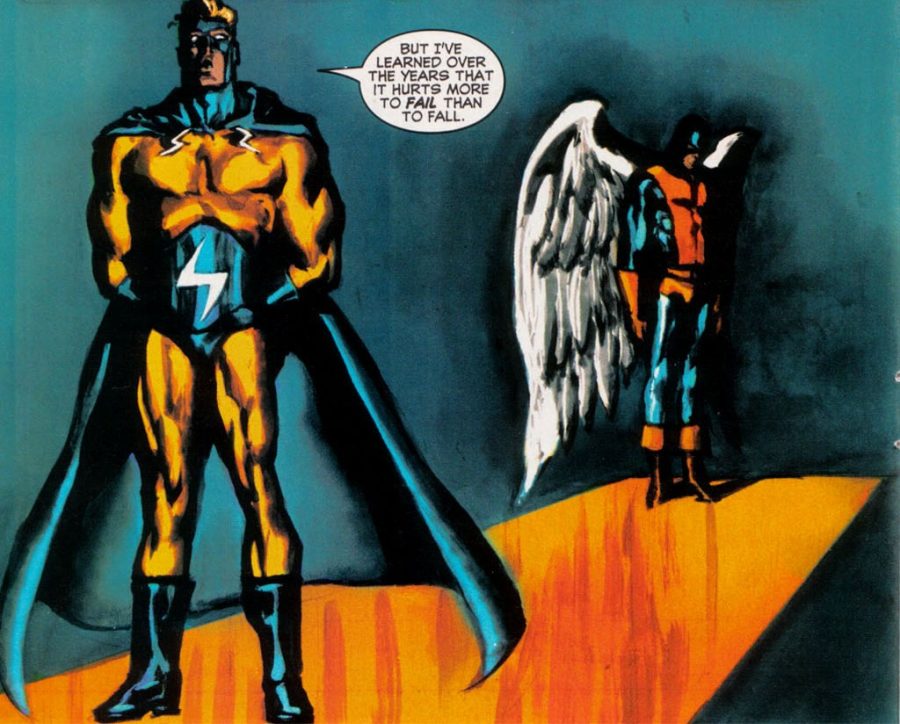
I do wish we were given a greater sense of the weight of Bob’s heroic contributions before the world forgot him, but I enjoy how Jenkins generates a character raging against the loss inside him… and how other characters respond to their own losses. Interestingly, Sentry was created at a time when Marvel was experiencing loss itself — the consistently grim tones of their 90s output and other poor decisions had harmed sales and placed the publisher in a desperate position, with Marvel filing for bankruptcy in 1996. Too much darkness and violence had driven fans away, creating a “void” in sales.
Out of the ashes of these “dark ages” was born the Marvel Knights, and alongside books such as Daredevil and Black Panther, The Sentry promised a much-needed injection of creativity and hope. The Marvel Knights imprint didn’t single-handedly pull Marvel back from the brink, but series like The Sentry proved the company could backpedal from the abyss and create narratives which rooted their characters in strong writing, fantastic art, and relatable themes. Like the title character is intended to be a pillar of hope for a community surrounded by darkness and despair, The Sentry helped inspire a new direction at Marvel. It proved there could be change, hope, and growth. The status quo didn’t need to remain broken.
Now someone just needs to remind Peter Parker of that so he can actually win a Pulitzer…
Positives
+ Unique take on an original character
+ Various artistic talents
+ Themes of loss and hope
Negatives
- Not as fully integrated within the Marvel Universe as it could be
The Bottom Line
Paul Jenkins and his stable of artists bring Marvel into the 21st century with a clever narrative about a new hero founded on strong themes.
| Story/Plot | 8.0 |
| Writing | 8.5 |
| Editing | 8.0 |
| Art | 9.0 |