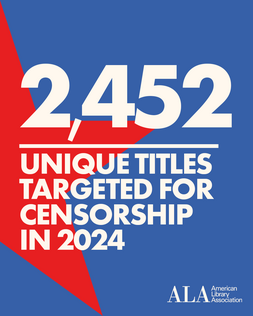
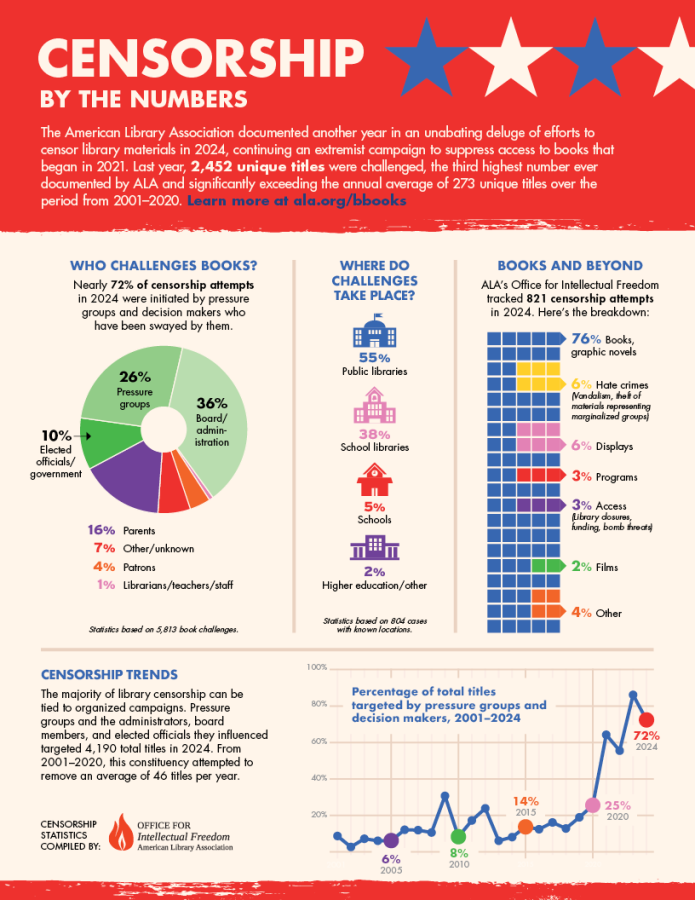
The celebration of intellectual freedom is still appropriate in 2025. In 2024, the Office for Intellectual Freedom found 821 attempts to ban or restrict library materials. This is down from the 1,247 challenges with 4,240 unique title challenges in 2023. However, this data only shows challenges and bans which have been reported.
In the Books Department, we try to celebrate Banned Books Week every year. If you are curious about how the week got started or what “banning books” means, feel free to check out our original Banned Books article from 2020 and the later posts from 2022 and 2023. We also have reviews of challenged/banned books to coincide with Banned Books Week over the past years: Saga, Heartstopper, and Banned Books Week 2021.
Throughout the years, books have been banned for both strange and understandable purposes, like the lack of pants on the toddler in the No David picture book or the “anti-police sentiment” in the North Korean memoir Banned Books Club. The ALA’s Banned Books Week website showcases the most challenged books of the year and the prominent reasons for those challenges.
Unheard Voices
In 2021, most books were challenged for reasons of diversity. In 2024, these reasons have not changed. On the list below, five out of the ten titles deal with LGBTQ+ issues. Four of the remaining five deal with heavy topics like drugs, human trafficking, or sexual abuse.
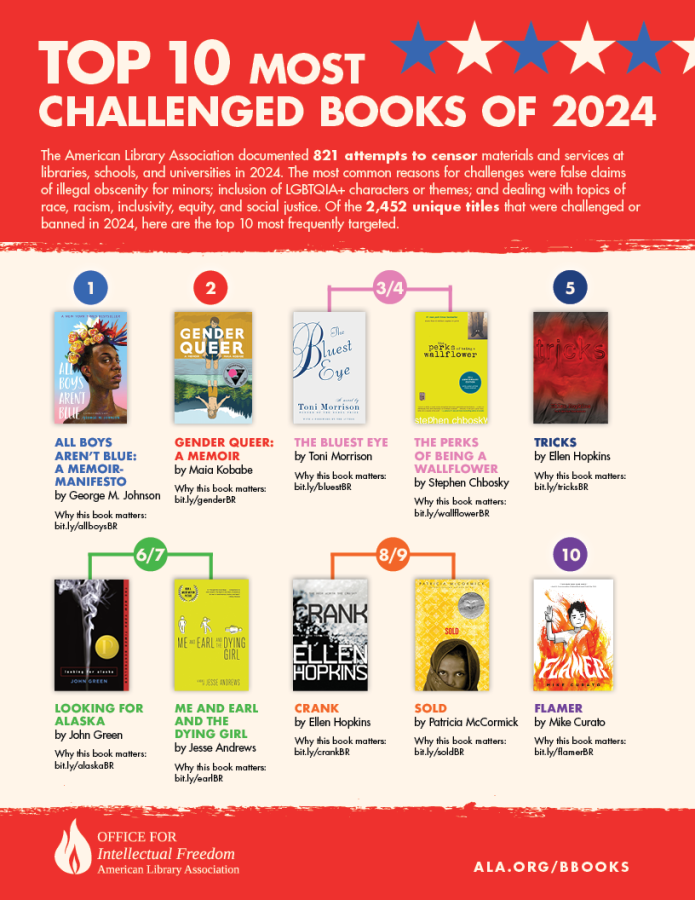
All but one of these books are marketed for teens, who deal with these issues more than we care to admit. Our world — the one in which children are growing up — is fallen because of sin. I have heard preteens discuss a drug raid at their middle school, and I have met sexually active girls who were likely groomed or abused by grown men. The majority of teens with whom I work are closeted LGBTQ+ members. These stories reflect issues that kids in our community may need to see in order to reconcile their lived experience with the ideal of childhood innocence.
Many of these banned books seem to target minorities with whom we may disagree, but what about those Christian minorities we do not consider? If we ban all LGBTQ+ books, what happens to the de-transitioned author or the previously gay person who wants to tell their story of finding Christ? These are voices so tiny they may never be heard, and they will not find the right audience if all books about sensitive topics are haphazardly banned. If we cannot deal with a cartoon butt, what can we deal with?
Galatians 5:1 states, “So Christ has truly set us free. Now make sure that you stay free, and don’t get tied up again in slavery to the law” (NLT). Paul specifically is referencing how Jewish Christians would insist Gentile Christians become circumcised in order to be true Christ followers, instead of living in the grace that comes through Christ. We are not called to hinder the faith walks of others but to come alongside and encourage. This doesn’t give us permission to indulge in sin. On the contrary, Galatians 5:13 continues, “For you have been called to live in freedom, my brothers and sisters. But do not use your freedom to satisfy your sinful nature Instead, use your freedom to serve one another in love.” We do not take this freedom for granted. We are to use it in service, which may include allowing the publication of books we do not like but which may help someone else.
Conclusion
Rarely anything happens in a single moment, and loss of intellectual freedom is the same. It snowballs. Banning books is a lazy attempt at avoiding hard or taboo discussions. An attempt rooted in fear. The Bible is clear about living by fear: “For God has not given us a spirit of fear and timidity, but of power, love, and self-discipline” (2 Tim. 1:7 NLT). We need not be too timid to have hard conversations, regardless of the topic. After all, explaining our faith can sometimes be a hard conversation in itself.
For the nonbeliever, our Christian material is offensive. 1 Corinthians 1:18 states plainly, “The message of the cross is foolish to those who are headed for destruction! But we who are being saved know it is the very power of God” (NLT). The state of Utah banned the Bible from schools in 2023, stating it is “violent and vulgar.” And they are right! Our Scriptures contain stories of genocide and incest, not to mention the Song of Solomon. But to only see the negative means ignoring God’s hand throughout those infamous tales. This idea is not limited to Scripture, either. Many books (especially Young Adult ones) about difficult topics end in hope and an action plan. After all, one first needs to recognize the darkness before the light can shine on it.
Artwork courtesy of the American Library Association, www.ala.org